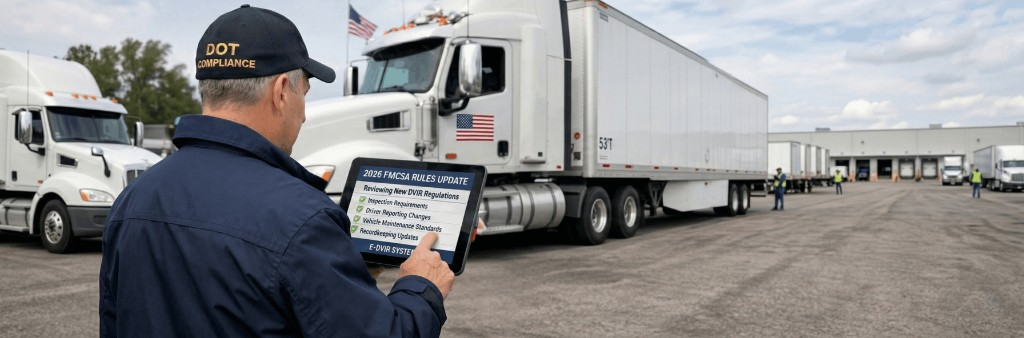
Introduction: The 2026 Compliance Shift
The Federal Motor Carrier Safety Administration (FMCSA) is fundamentally shifting how commercial fleets manage their daily safety compliance. In February 2026, 11 critical new rules and enforcement mandates took effect (as finalized in the Federal Register), directly targeting pre-trip inspection loopholes, Driver Vehicle Inspection Report (DVIR) falsification, and roadside audit transparency.
If you are a safety director or a fleet owner still relying on physical clipboards, carbon-copy paper, and honor-system reporting, you are entering a high-risk compliance zone. The government is rapidly closing the gaps where "pencil whipping" thrives. Adapting to these new regulations requires shifting from paper to an electronic dvir system that enforces accountability. Let's break down the 11 new rules you must prepare for.
Key Takeaways: FMCSA 2026 Updates
- Data Synchronization: The FMCSA now heavily scrutinizes the time gap between ELD log-ins and DVIR submissions.
- Closed-Loop Compliance: Section 396.11 has been tightened, requiring verifiable digital signatures from mechanics before a truck can be legally dispatched.
- Software Necessity: The operational burden of these 11 rules makes finding affordable electronic inspection systems for DOT compliance not just an operational upgrade, but a legal necessity.
Rule 1: Stricter Digital Trail Requirements (The End of the Clipboard)
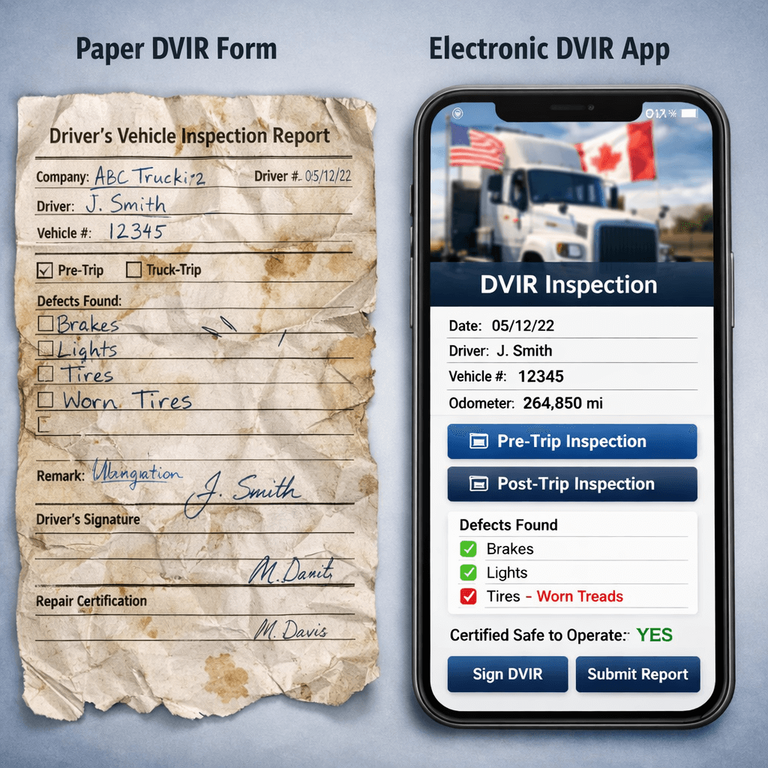
While the FMCSA has not outright banned paper, Rule 1 implements a "burden of proof" standard regarding legibility and preservation. On February 19, 2026, the FMCSA officially clarified language around DVIRs, explicitly stating that Electronic Driver Vehicle Inspection Reports are legally robust. If a DOT officer cannot clearly read a grease-stained, rain-damaged paper DVIR from three weeks ago, it is now treated as a "missing document" rather than a "poorly maintained document." The fines for missing records have increased. This rule heavily incentivizes adopting pre trip inspection software to maintain a clean, unalterable digital trail.
Rule 2: Real-Time Timestamp Synchronization
For years, drivers have falsified the start times of their pre-trip inspections to save their Hours of Service (HOS) clocks. Rule 2 mandates closer scrutiny of Timestamp Synchronization. If an ELD registers a driver "On Duty" at 6:00 AM, and the vehicle begins moving at 6:03 AM, the FMCSA now flags this automatically during an audit. It is physically impossible to complete a thorough pre-trip inspection of an 80,000-pound combination vehicle in 3 minutes. Your driver vehicle inspection report software must now provide irrefutable timestamp metadata.
Expert Insight: How a 3-Minute Timestamp Gap Triggered a Level 1 Audit
A regional fleet in the Midwest learned this the hard way. During a routine Level 1 inspection, the DOT officer pulled the driver's ELD data and DVIR records side by side. The ELD showed "On Duty" at 05:47:12 and "Driving" at 05:50:03—a 2-minute 51-second window. The driver had submitted a "complete" pre-trip DVIR for an 18-wheeler in under 3 minutes.
The officer knew that was impossible. A proper pre-trip for a combination vehicle takes 15–20 minutes minimum. The fleet was flagged for a full terminal audit. The result: multiple violations for falsified records, a downgraded safety rating, and over $12,000 in fines—all because the paper DVIR timestamps did not sync with the ELD. Electronic DVIR software that auto-captures GPS and device time eliminates this risk entirely.
Compliance Tip: If you use paper DVIRs, cross-check a random sample against ELD logs weekly. Any inspection completed in under 10 minutes for a tractor-trailer should be investigated. With electronic systems, timestamps are locked at submission and cannot be backdated.
Rule 3: Enhanced Mechanic Signature Verification (FMCSA 396.11)
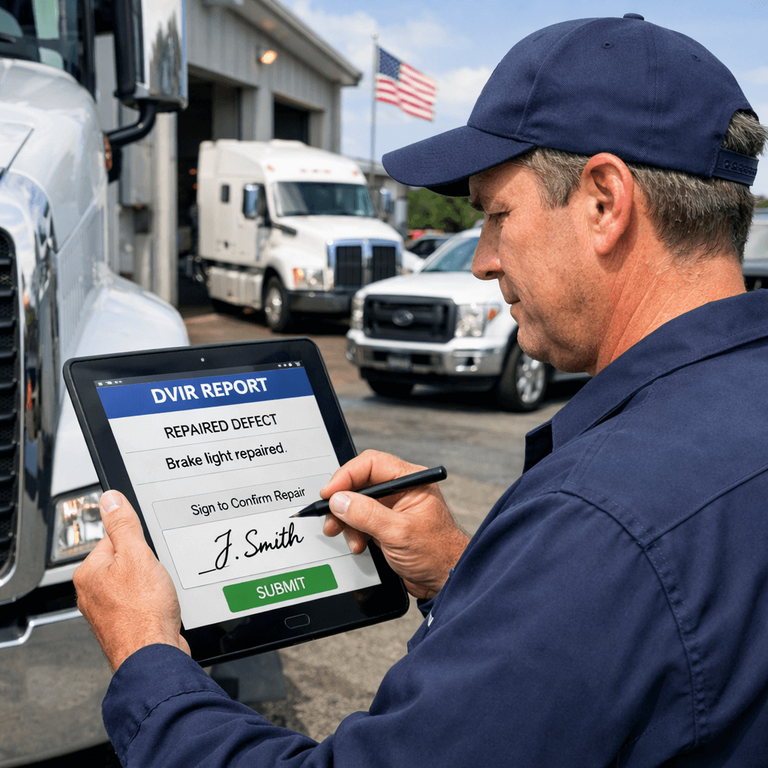
Under the revised FMCSA 396.11 guidelines, a simple scrawl on a piece of paper by "some guy in the shop" is no longer sufficient. If a defect is logged, the repair must be signed off by a verified maintenance provider, and the subsequent driver must acknowledge that repair. The 2026 updates require that these three steps (Driver 1 -> Mechanic -> Driver 2) be fully traceable. This is virtually impossible to manage on paper at scale, requiring an electronic dvir system with closed-loop signature tracking.
- Step 1 — Driver 1: Identifies the defect during pre-trip or post-trip and submits the DVIR. The defect is logged with timestamp and vehicle ID.
- Step 2 — Mechanic: Repairs (or certifies repair is unnecessary) and signs digitally. The system records the mechanic's identity and timestamp.
- Step 3 — Driver 2: Reviews the repair and signs before driving. The vehicle cannot be dispatched until this step is complete.
Real-World Scenario: A fleet in Texas had a mechanic sign off on a brake adjustment, but the next driver never reviewed the repair on the paper form. The truck was dispatched. During a roadside stop, the officer found the DVIR "loop" was incomplete—Driver 2's signature was missing. The truck was placed out of service, and the carrier received a 396.11(c) violation. Electronic DVIR software blocks dispatch until all three signatures are in place, preventing this entirely.
Rule 4: Immediate Dispatch Blocking for OOS Defects
If a driver logs a defect that meets the Out-of-Service (OOS) criteria (e.g., a massive air leak or bald steering tires), the new rules explicitly mandate that the motor carrier must have a systemic way to prevent that vehicle from being dispatched. A paper form sitting in a terminal inbox while the truck drives away is a critical failure. Digital software solves this by instantly pinging dispatch and changing the truck's status to "Grounded."
Rule 5: Increased Auditing of "No Defect" Reports
We call it "pencil whipping"—drivers checking every single box as "OK" without actually looking at the truck. The 2026 rules increase the frequency of random DOT compliance reviews specifically targeting fleets with mathematically improbable "no defect" rates. If your fleet operates 50 older trucks and reports 0 defects over 6 months, you will trigger an audit. Advanced pre trip inspection software combats this by forcing drivers to randomize check orders or take mandatory photos.
Rule 6: Roadside "Digital Audit Mode" Expectations
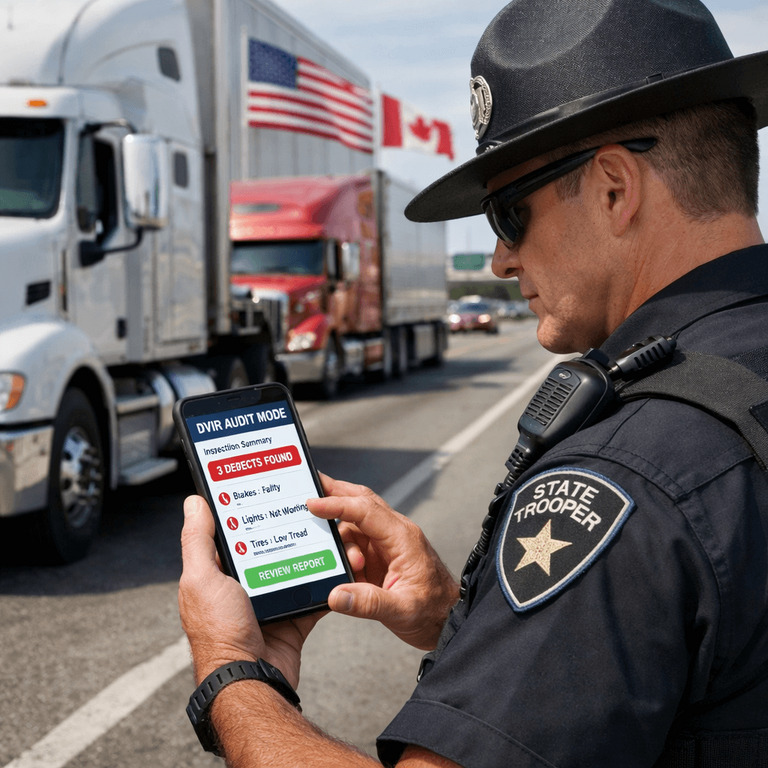
When a driver is pulled over for a Level 1 or Level 2 inspection, DOT officers now expect to view recent DVIRs seamlessly. Fumbling with a messy binder causes delays and frustrates officers, often leading to a more rigorous physical inspection. While not strictly mandated, officers are trained under the 2026 guidelines to prefer "Digital Audit Modes"—clean, locked screens that show exactly the 90-day history required without exposing other proprietary company data.
Rule 7: Stricter Brake Adjustment Documentation
Brake failures remain the number one cause of commercial vehicle accidents. The new regulations demand highly specific documentation regarding pushrod travel and slack adjuster status if a brake issue is noted. A simple note saying "brakes feel soft" is no longer legally protective. Electronic systems provide dropdown menus that force drivers and mechanics to use the exact DOT terminology when recording these critical defects.
Rule 8: CDL Eligibility and Record Crackdowns
Beyond vehicle checks, the FMCSA finalized major rules in February 2026 regarding non-domiciled CDLs and medical registry (NRII) tracking. If your driver qualification files are a mess, and you dispatch an unverified driver who then fails a roadside pre-trip inspection, the compounding fines are astronomical. An integrated digital ecosystem ensures that disqualified drivers cannot even log into your DVIR system.
The 2026 CDL rules tighten the requirements for drivers who hold licenses from states where they do not reside. Auditors are now cross-referencing DQ files with the National Registry of Certified Medical Examiners (NRME) and state licensing databases. A driver whose medical certificate expired last month but is still on your roster represents a critical compliance gap. When that driver is pulled over and fails to produce a valid medical card, both the driver and the carrier face violations. The new rules also crack down on carriers who knowingly employ drivers with suspended or revoked CDLs. Keeping DQ files, medical certs, and DVIR access in sync through a single platform eliminates these blind spots before they become roadside incidents.
Rule 9: 90-Day Record Retention Cloud Mandates
You must keep DVIRs for 3 months (and up to 24 months for some maintenance records). However, the new enforcement standards stipulate that these records must be protected against catastrophic loss and producible within minutes for a DOT auditor. This effectively acts as a soft mandate for cloud storage. The days of keeping records in a cardboard box are over. Finding affordable electronic inspection systems for DOT compliance ensures your records are backed up across multiple servers safely.
Case Study: When a Flood Wiped Out 90 Days of Paper DVIRs
A 35-truck fleet in Louisiana stored its paper DVIRs in a filing cabinet at the back of the dispatch office. When a storm caused localized flooding, the cabinet was submerged. By the time the water receded, three months of inspection records were illegible—ink had run, thermal paper had fused, and staples had rusted through.
Two weeks later, a DOT auditor arrived for a scheduled review. The fleet could not produce the required 90-day history. The auditor cited failure to retain records under 396.11(b)(2). The fleet faced fines, a downgraded safety rating, and the costly task of reconstructing what records they could from driver logs and repair orders. A cloud-based DVIR system would have kept every record encrypted and accessible from any device. The fleet switched to electronic inspections within a month—a decision that would have saved them thousands.
Rule 10: Harsher Fines for Willful Falsification
The FMCSA has lost its patience with forged records. Under the February 2026 updates, the civil penalty limits for willful falsification of a DVIR have significantly increased (with maximum fines reaching up to $19,000 per OOS violation). If an investigator determines a driver purposely checked "Safe to Operate" on a vehicle with a known OOS violation, both the driver and the motor carrier can face devastating fines.
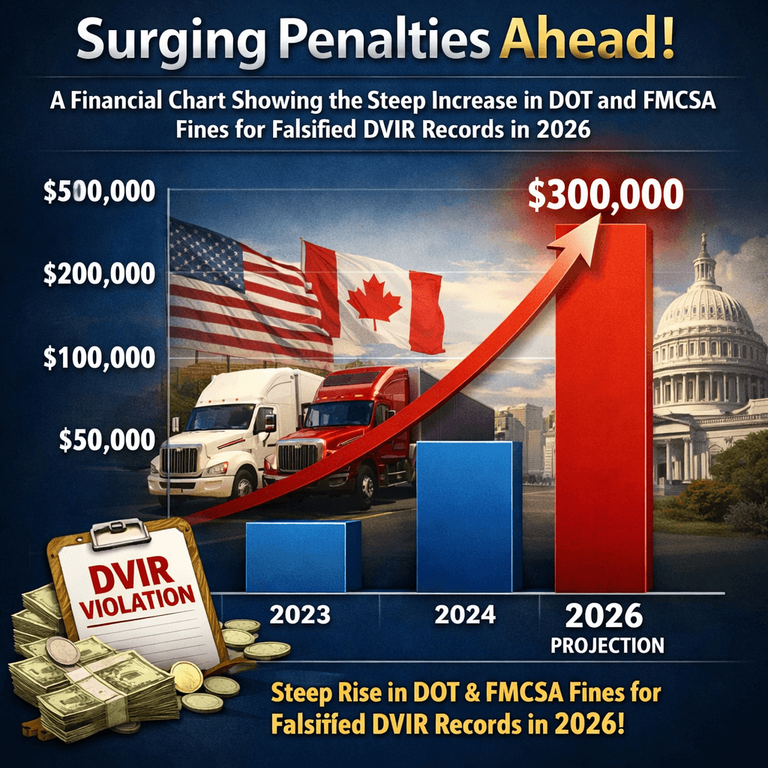
How the $19,000 Fine Is Calculated: A Breakdown
Understanding the penalty structure helps fleets quantify compliance risk. The FMCSA adjusts civil penalties annually for inflation under the Federal Civil Penalties Inflation Adjustment Act. For 2026, the maximum penalty for willful falsification of records—including DVIRs—reaches $19,000 per violation.
How it adds up:
- Base violation: A driver marks "Safe to Operate" on a vehicle with a known OOS defect (e.g., bald tires, air leak). Base fine: $2,500–$5,000.
- Willful falsification multiplier: If the investigator determines the falsification was intentional (not merely negligent), the penalty can be doubled or tripled.
- Per-occurrence stacking: Each falsified DVIR is a separate violation. One driver falsifying 5 reports = 5 × $3,800 (mid-range) = $19,000.
- Motor carrier liability: The carrier can be fined separately for failing to maintain adequate oversight. Combined driver + carrier fines for a single incident routinely exceed $25,000.
ROI takeaway: A $50–$100/month electronic DVIR subscription pays for itself after avoiding a single violation. The math is simple: one avoided fine covers years of software costs.
Rule 11: Mandatory Driver Software Proficiency
Finally, it is no longer an excuse for a driver to tell a DOT officer, "I don't know how this app works." The motor carrier is now legally responsible for ensuring drivers are fully trained on whatever electronic logging or DVIR system they deploy. The software must be intuitive, and the carrier must provide documented training.
How to Prepare Your Fleet for the 2026 Changes
Deploying compliance tools doesn't have to break your budget. Here is a step-by-step approach to evaluating your fleet's readiness for the February 2026 updates:
- Audit Current Paper Processes: Review how your drivers currently submit DVIRs and measure the time it takes for a mechanic to receive a defect notice. Look at yesterday's DVIRs—are they legible? Are the timestamps realistic? If not, you are already failing the new standards.
- Adopt Electronic DVIR Software: Transition to an electronic DVIR system to automatically log GPS locations and timestamps during inspections. Choose a modern, mobile-friendly app that captures exact timestamps during the inspection process.
- Train Drivers on Timestamp Syncing: Ensure drivers know that their pre-trip inspection timestamps must align perfectly with their Hours of Service (HOS) logs. Make sure they understand that inspection times must logically align with their ELD driving statuses.
- Implement Closed-Loop Maintenance Signatures: Use an app that requires a digital sign-off from both the mechanic and the next driver before the vehicle leaves the yard. Ensure your software forces mechanics to digitally sign off on repairs before the app allows the next driver to complete their pre-trip check.
By transitioning to affordable electronic inspection systems for DOT compliance, fleets can avoid these massive new fines and streamline their entire maintenance workflow.
Frequently Asked Questions
What are the new FMCSA rules for 2026?
In February 2026, the FMCSA introduced 11 new rules focusing heavily on digital compliance, stricter electronic DVIR mandates, enhanced roadside audit modes, and increased penalties for falsifying pre-trip inspection records.
Is DVIR software mandatory under the 2026 FMCSA updates?
While paper is not entirely banned for all fleets, the new rules require timestamp synchronization and real-time defect reporting that make relying on paper logs highly impractical and legally risky.
How do the 2026 rules affect mechanic signatures under FMCSA 396.11?
The updated regulations require closed-loop, verifiable mechanic signatures. An electronic DVIR system with physical guardrails preventing a truck from being dispatched until a defect is signed off is highly recommended.
Where can I find affordable electronic inspection systems for DOT compliance?
Platforms like PTI4YOU offer scalable pricing for fleets to seamlessly transition to compliant electronic DVIR apps, fulfilling all 2026 FMCSA requirements without the high costs of legacy enterprise software.
Final Thoughts: Upgrade Before the Audit
The February 2026 FMCSA rules are a clear message to the trucking industry: the era of "tick and flick" paper compliance is officially dead. The government is using data to find anomalies, and paper records are the easiest target for massive fines. Protecting your fleet means adopting a reliable driver vehicle inspection report software before you are forced to by an auditor.
Bulletproof Your 2026 FMCSA Compliance
Stop worrying about missing signatures and invalid timestamps. Let PTI4YOU handle the compliance heavy lifting with our top-rated electronic DVIR app.
Start your 15-day free trial today. No credit card required.
Start Your 15-Day Free Trial – No Credit Card RequiredZero setup fees. Zero hardware. 25-minute driver onboarding.