
If you are a Safety Director or Fleet Manager, there is a specific block of text in the federal code that probably keeps you up at night. It's not HOS (Hours of Service). It's not IFTA taxes. It's a little paragraph tucked away in the maintenance section known as 49 CFR § 396.11.
More specifically, it's the "Driver Signature" requirement hidden inside that rule.
Every year, thousands of fleets get slapped with "Conditional" safety ratings and massive fines during DOT terminal audits. And the most frustrating part? The fines rarely happen because a truck was actually broken. The fines happen because someone didn't sign a piece of paper proving that the truck wasn't broken.
Let's strip away the government jargon. In this guide, we are going to break down exactly what FMCSA 396.11 requires, why the "3-Step Signature Loop" is the biggest paperwork trap in trucking, and how you can bulletproof your fleet against it using modern compliance strategies.
Key Takeaways: FMCSA 396.11
- The 3-Step Loop: A defect requires signatures from the reporting driver, the repairing mechanic, and the reviewing driver.
- The Biggest Trap: Failing to collect the "Driver B" signature before the truck is dispatched.
- The Solution: Implementing an electronic DVIR system that physically blocks drivers from starting their shift until they acknowledge repairs.
1. What is the FMCSA 396.11 Driver Signature Rule?
FMCSA 396.11 is a federal safety regulation requiring commercial drivers to prepare a daily post-trip Driver Vehicle Inspection Report (DVIR). If a defect is found, the rule legally mandates a closed "three-signature loop": the reporting driver signs, the repairing mechanic certifies the fix, and the reviewing driver acknowledges the repair before the vehicle can be dispatched again.
In plain English, FMCSA 396.11 is the federal law that dictates how Driver Vehicle Inspection Reports (DVIRs) must be handled to ensure unsafe equipment never enters highway traffic. It mandates that every driver operating a commercial motor vehicle (CMV) must prepare a report at the end of each day's work on each vehicle they operated. The failure to secure the final "Driver B" signature is a primary trigger for audit failures and massive civil penalties.
The report has to cover specific parts and accessories. While the industry heavily searches for pre trip inspection software, FMCSA 396.11 is technically a mandate for post-trip inspection reports. You can't just write "Truck looks good." The DOT explicitly requires the checking of:
- Service brakes and parking brakes
- Steering mechanisms
- Lighting devices and reflectors
- Tires, horn, and windshield wipers
- Rear vision mirrors and coupling devices (like fifth wheels and glad hands)
- Wheels, rims, and emergency equipment
If a driver finds a defect, they note it. Simple, right? But finding the defect is only 10% of the regulation. The other 90% is what happens after the defect is found. That is where the signatures come in.
2. The 3-Step Signature Loop (Where Fleets Fail)
The DOT doesn't just want you to find broken things. They want absolute, undeniable proof that you fixed them before the next driver put that truck into gear. This is known as the Signature Loop, and failing to complete it is one of the most common DVIR violations in the industry.
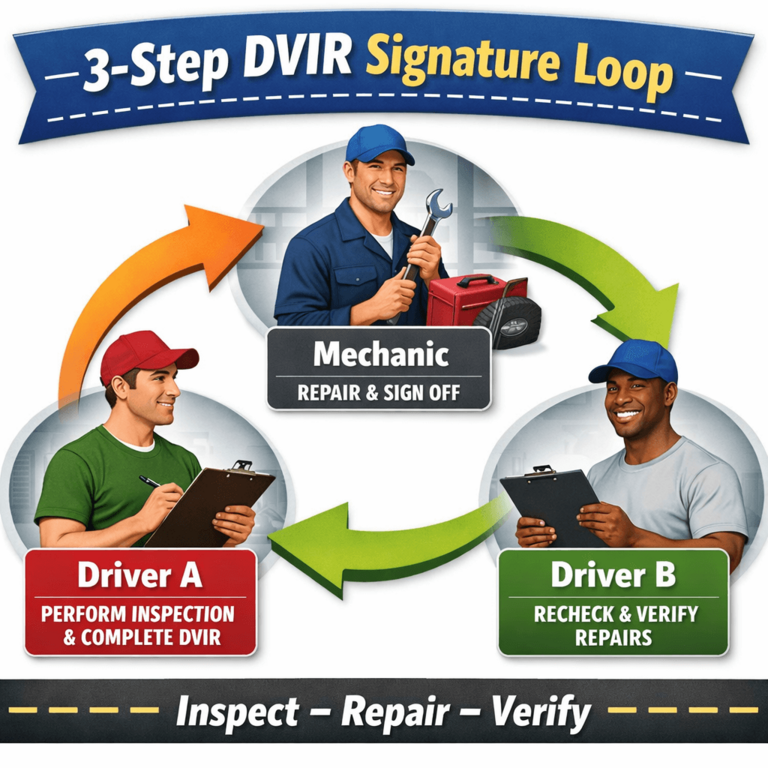
Figure 1: The mandatory 3-step signature loop required by 396.11(c).
Here is how the law demands the workflow must happen:
- Signature 1: The Reporting Driver (Driver A). The driver finishes their route, notices a leaky hub seal, writes it on the DVIR, and signs the bottom of the form.
- Signature 2: The Motor Carrier / Mechanic. The truck goes to the shop. The mechanic fixes the hub seal. The mechanic must then sign the specific section of the DVIR titled "Certification of Repairs." (Note: If the mechanic decides the defect doesn't affect safety, they still have to sign it stating repairs were "unnecessary").
- Signature 3: The Reviewing Driver (Driver B). This is the killer. Before the truck moves again, the next driver scheduled to take that truck MUST look at the DVIR from yesterday, see the mechanic's signature, and sign their own name acknowledging that they reviewed the repair.
If you use paper logbooks, keeping this loop intact is a logistical nightmare. Often, the yellow carbon copy gets ripped out, the mechanic signs a work order but not the DVIR, and Driver B just hops in and drives away. In the eyes of the FMCSA, that truck was never fixed.
3. Why "Driver B's" Signature is the DOT's Favorite Target
When an auditor from the DOT walks into your terminal, they aren't looking at your brand new trucks. They pull the DVIR history for the oldest, highest-mileage trucks in your yard.
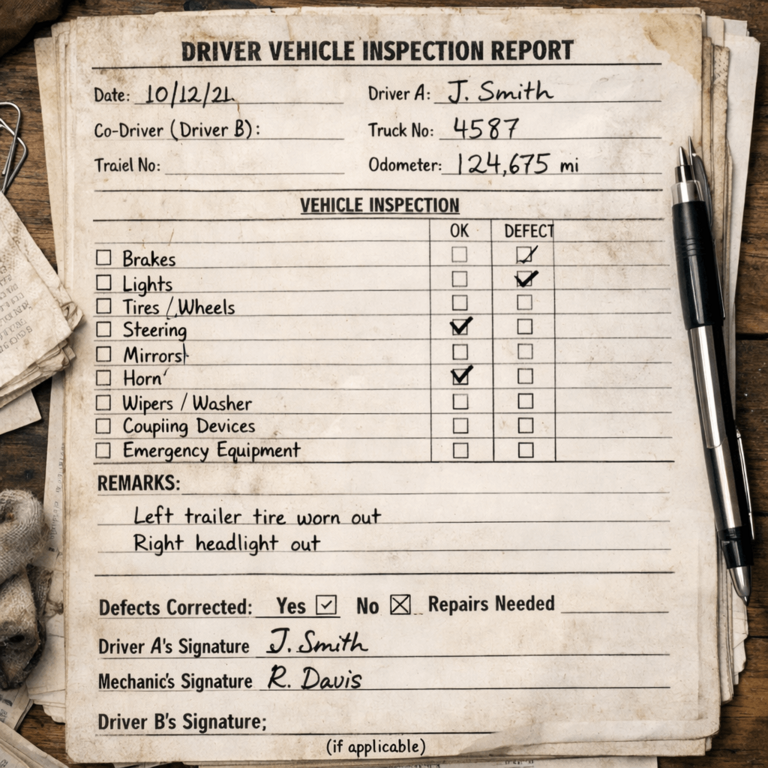
Figure 2: The missing "Driver B" signature—a guaranteed fine during a DOT audit.
Why do drivers skip Signature #3?
It usually comes down to psychology. We hear it all the time from "yard jockeys" and slip-seat drivers: "I didn't write it up. The shop fixed it. Why should I put my name on it?"
Because the FMCSA wants accountability. They want to force the driver to physically check the work. If Driver A reported "slack adjusters out of tolerance," and the mechanic signed it off, Driver B is supposed to look at the slack adjusters and say, "Yep, they look good." If Driver B signs it and hits the highway, and the brakes fail an hour later, the liability is perfectly clear.
4. The "No Defect" Exception (And The Trap Hidden Inside)
In 2014, the FMCSA rescinded the requirement for drivers of passenger-carrying CMVs (and property-carrying CMVs) to submit a DVIR if no defects were found. However, there is a massive trap here.
Many drivers interpret this as: "If my truck is fine, I don't have to do anything."
Wrong.
You still have to do the pre-trip and post-trip inspections. And if your company policy requires a report to track maintanance intervals or for internal safety ratings, the driver still needs to sign that "No Defect" report. Furthermore, if you operate in California under the CHP BIT program, their state rules often overlap and require strict daily reporting regardless of defect status.
This leads to the dreaded "Pencil Whipping." Drivers will sit in the cab, tick "No Defect" down the entire line, scribble their signature, and start their clock. If the DOT cross-references the DVIR timestamp with the ELD (Electronic Logging Device) and sees the inspection took 45 seconds, you are facing a falsification of records charge.
5. Real-World Scenario: The $10,000 Missing Ink
To understand how this destroys fleets, let's look at a scenario our compliance experts saw last year with a mid-sized fleet.
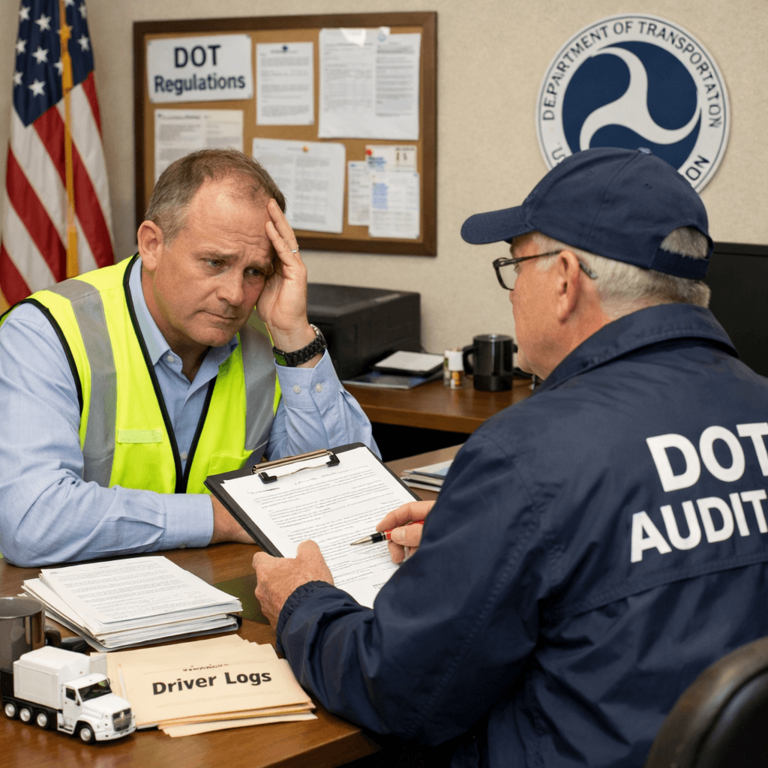
Figure 3: Paperwork errors during a compliance review can trigger immediate fines and rating downgrades.
The company had 30 trucks. An auditor pulled the files for a 3-month period. They found that out of 85 defects reported by drivers, the mechanics had fixed all 85. They had the receipts for the parts. They had the shop work orders. The trucks were 100% safe.
But on 40 of those paper DVIRs, the mechanic forgot to sign the "Certification of Repairs" box on the actual DOT form. On 20 others, Driver B didn't sign.
The auditor cited them for 60 counts of violating 396.11(c). The fine was nearly $10,000. Worse, it bumped their safety rating down, which triggered a 15% increase in their insurance premiums at their next renewal. All because of missing ink.
6. How an Electronic DVIR System Forces Compliance
You cannot train away human error. You can hold safety meetings every week telling drivers to sign the forms, but on a rainy Friday afternoon, they will forget.
The only way to guarantee 396.11 compliance is to make it technologically impossible to break the rule. Upgrading to a digital pre trip inspection process is the single most effective way to eliminate these violations. This is why fleets are rapidly moving to the most reliable pre trip inspection software available.
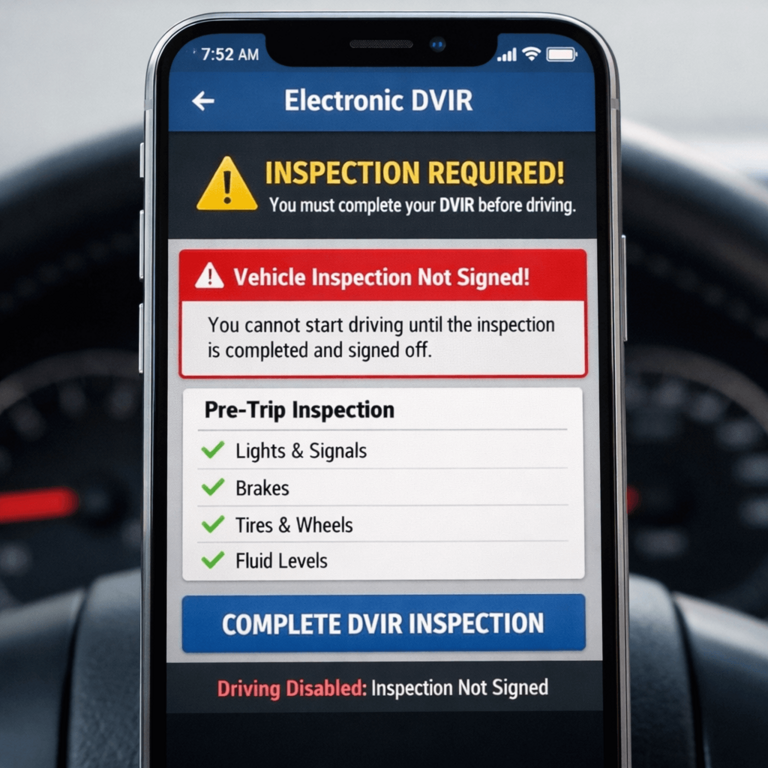
Figure 4: eDVIR apps physically prevent the driver from proceeding without closing the signature loop.
Here is how a system like PTI4YOU handles the exact same scenario:
- The Digital Wall: When Driver B logs into the app to start their day, the screen flashes red. It shows them yesterday's defect (e.g., the leaky hub seal) and the mechanic's digital signature.
- The Forced Acknowledgment: The app physically will not let the driver access the new day's DVIR, and will not let them change their status, until they draw their signature on the screen tapping "I acknowledge the repair."
- Cloud Retention: 396.11(b)(2) requires you to keep these records for 3 months. Paper forms get lost or fade in the sun. Electronic records are stored in the cloud instantly. When the auditor asks for Truck #14, you hand them a tablet with a perfect, searchable PDF history.
Compliance Tip: The "Time-on-Task" Guardrail
To stop "pencil whipping", modern eDVIRs track how long it takes a driver to complete the form. If a driver clicks through 40 checkpoints in 90 seconds, the software instantly flags the Safety Director. You catch the violation internally before the DOT catches it on the road.
7. How Does Electronic DVIR Software Stop Pencil Whipping?
Electronic DVIR software stops pencil whipping by enforcing structural physical verification. Modern applications use GPS geofencing to confirm the driver is physically adjacent to the truck, mandate real-time photo uploads of critical components like tire tread and brake slack adjusters, and track time-on-task to automatically flag mathematically impossible 60-second inspections.
In the highly litigious environment of 2026, relying on the honor system is a profound corporate liability. Plaintiff attorneys routinely subpoena telematics data and cross-reference it with paper DVIRs to expose "tick and flick" inspections — the discrepancy is the foundation of nuclear verdicts. By transitioning to a mobile-first digital workflow such as PTI4YOU, fleet safety directors can enforce uncompromising compliance through rigid software guardrails that make fabricated inspections technologically impossible rather than merely discouraged by policy. For a deeper dive into the psychology, root causes, CSA 2026 "Driver Observed" scoring, and the California AB 3278 audit impact of pencil whipping, read our full playbook on what pencil whipping is and how technology stops fake DVIRs.
8. Frequently Asked Questions
Does the mechanic need to sign if we defer the repair?
Yes. If the defect does not compromise the safety of the vehicle (e.g., a broken radio or a dent in the bumper), the motor carrier or mechanic must still sign the DVIR certifying that the repair is "unnecessary for the safe operation of the vehicle" before it is dispatched.
Can a driver sign a DVIR digitally?
Yes. Under 49 CFR 390.31, the FMCSA explicitly allows the use of electronic signatures and digital record-keeping for all required documents, including DVIRs, provided the signature can be directly linked to the specific driver or mechanic.
What happens if a driver fails to sign the DVIR?
A missing signature on a standard report is a recordkeeping violation. However, if "Driver B" fails to sign a DVIR that contained a previous defect, the FMCSA considers the vehicle to be operating un-repaired. This carries much heavier fines and severe OOS (Out of Service) risks.
Do we need to retain DVIRs if no defects were found?
Yes. Even a "clean" electronic driver vehicle inspection report with zero defects must be signed by the driver who conducted the inspection, and it must be retained by the motor carrier for a period of three months.
9. Conclusion: Protecting Your Safety Rating
The regulations in FMCSA 396.11 are not suggestions; they are federal law. Every time a truck leaves your yard with a missing signature on a DVIR, you are rolling the dice with your company's safety rating and financial future.
You don't need to hire more admin staff to chase down mechanics and drivers for signatures. You just need to upgrade your tools. Moving away from paper is the single most effective way to eliminate 396.11 violations overnight.
Stop Chasing Signatures
Automate your DVIR process and guarantee 100% FMCSA compliance with PTI4YOU.
Start your 15-day free trial today. No credit card required.
Start Your 15-Day Free Trial – No Credit Card RequiredZero setup fees. Zero hardware. 25-minute driver onboarding.