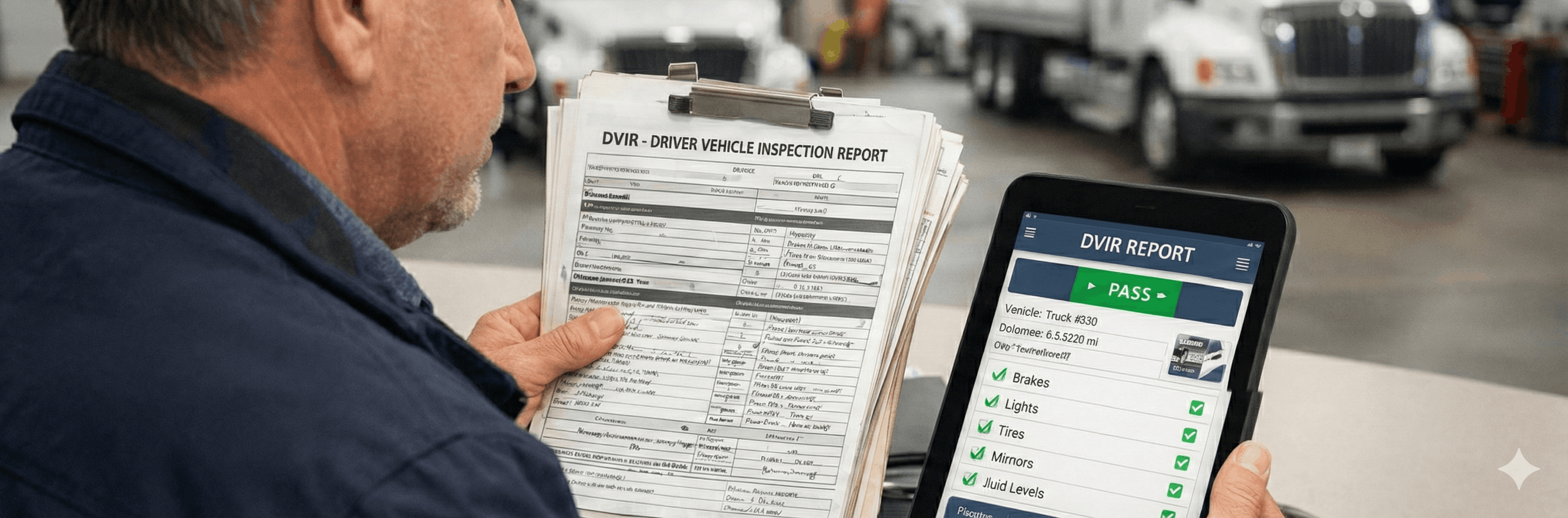
It’s 8:00 AM on a Monday. You walk into your office, coffee in hand, ready to start the week. And then you see it.
The Pile.
It's a stack of crumpled, grease-stained paper forms—the weekend's Driver Vehicle Inspection Reports (DVIRs). Some are torn. Some have coffee rings on them. Half of them are illegible scribbles that look more like a doctor's prescription than a DOT document. Now, you have to spend the next three hours manually entering this data into your maintanance spreadsheet, praying you don’t miss a "brake line" note buried in the comments.
This was the absolute reality for "Midwest Freight" (name changed for privacy), a 22-truck flatbed fleet operating out of Ohio. They weren't big enough for a million-dollar SAP system, but they were definitely too big for paper and Excel.
They were stuck in what we call the "Medium Fleet Trap."
Six months ago, they finally pulled the trigger on an automated DVIR solution. We tracked their results week by week. The data was so compelling we had to share it. Here is the full breakdown of how they saved 10+ hours a week and finally stopped the "paper chase."
1. The "Before" State: Anatomy of a Disaster
Running a medium-sized fleet (15–50 trucks) is arguably the hardest position in logistics. You have all the compliance headaches of a mega-carrier like Swift or Knight, but you don't have a 20-person safety department to handle it. Usually, it's just you and maybe a dispatcher.
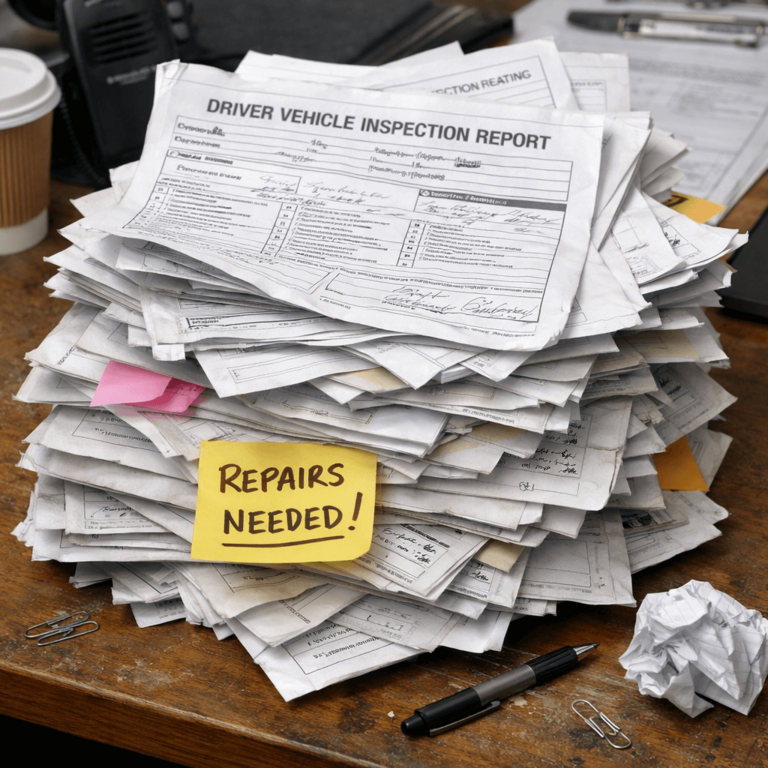
Figure 1: The "Box of Doom" that Midwest Freight relied on before automation.
At Midwest Freight, the workflow looked like this:
- Driver fills out a paper booklet (sometimes).
- Driver tears off the white copy and drops it in a "box" in the breakroom.
- The box sits there for 3-4 days until someone empties it.
- The Safety Manager (let's call him Dave) manually types the defects into Excel.
- Dave walks out to the shop to tell the mechanic about a broken light.
- The mechanic says, "I fixed that two days ago, didn't you see the note on the yellow copy?"
It was a communication black hole. Drivers felt ignored because "I wrote it up three times and nobody fixed it." Mechanics were frustrated because they didn't have a clear list of priorities. They were just running around putting out fires.
The Breaking Point
The turning point came during a routine DOT audit. The officer asked for maintenance records for Truck #14. Dave knew the work was done—he remembered buying the part—but he couldn't find the specific paper DVIR with the mechanic's signature. It had been lost in "The Pile."
That panic—the fear of a fine for work you actually did—was the final straw. For more on the risks of missing signatures and other audit traps, see our guide on 5 Common DVIR Violations & How to Avoid Them.
2. The "Medium Fleet Trap"
Why didn't they switch sooner? This is common. Medium fleets often feel like they are in a "No Man's Land" of technology.
- Too Small for Enterprise: The big systems cost thousands a month and require a dedicated IT guy to set up.
- Too Big for Paper: Once you pass 10 trucks, you physically cannot remember every maintenance issue in your head.
They needed a tool that was "plug and play." They needed something that the 62-year-old driver, who still uses a flip phone for calls, could figure out without a manual.
3. The Implementation Timeline
The biggest fear Dave had about switching to automated DVIR solutions for medium-sized fleets was driver pushback. His drivers were veterans. They hated technology. They didn't want "Big Brother" tracking them.
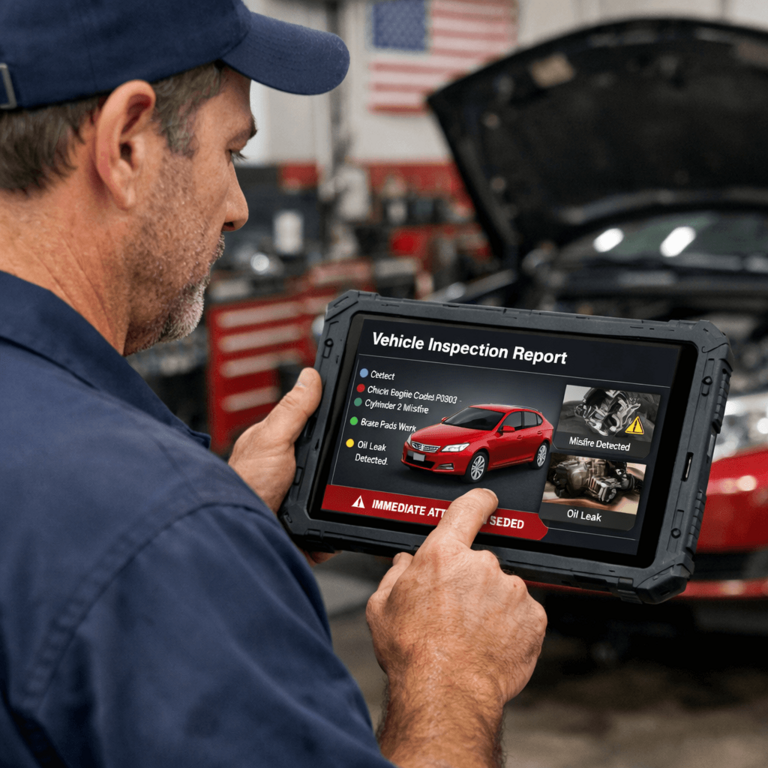
Figure 2: The lead mechanic checking "Truck #04" defects before it even arrives at the shop.
Here is how the rollout actually went:
-
Day 1 (Monday): The Mechanic Buy-In
We didn't start with drivers. We started with the shop. We gave the lead mechanic a rugged tablet. We showed him how defects would pop up instantly. His eyes lit up. No more deciphering handwriting? He was sold. -
Day 3 (Wednesday): The Beta Testers
We picked two drivers—one young tech-savvy guy, and one grumpy veteran. We let them use the app for two days. The veteran came back and said, "It's actually easier than finding a pen that works." -
Day 7 (Monday): Full Rollout
Training took exactly 15 minutes during the safety meeting. Why? Because the workflow is linear. Step 1: Open App. Step 2: Click "Yes/No". Step 3: Sign.
4. How Much Administrative Time Does Automated DVIR Software Save?
Switching from manual paper logs to an automated DVIR solution saves medium-sized fleets an average of 10 to 12 hours of administrative labor per week. By systematically eliminating manual spreadsheet data entry, mechanic chasing, and physical filing, a 22-truck fleet reduced its weekly administrative compliance workload from 10.5 hours down to just 30 minutes — generating over $14,400 in annual labor savings at $30/hour.
We tracked the administrative time spent on DVIRs for 4 weeks prior to the switch, and 4 weeks after. The results were shocking even to us. When calculating the financial return on investment (ROI), this time reduction is profound: with the Safety Manager's labor valued at $30 per hour, the 10-hour weekly savings generated $1,200 in monthly labor savings, equating to over $14,400 annually — not including the elimination of physical booklet printing costs or the prevention of catastrophic DOT audit fines from missing 49 CFR 396.11 records.
Weekly Admin Hours Spent on DVIRs
| Metric | Paper Process | Automated (PTI4YOU) | Difference |
|---|---|---|---|
| Data Entry Time | 4.5 Hours/Week | 0 Minutes | -4.5 Hours |
| Mechanic "Chasing" | 3 Hours/Week | 30 Minutes | -2.5 Hours |
| Filing/Auditing | 3 Hours/Week | 0 Minutes | -3 Hours |
| TOTAL SAVED | 10.5 Hours | 30 Minutes | 10 Hours/Week |
Think about that. 10 hours a week. That is a full work day reclaimed. Instead of typing data, Dave is now focused on load planning, driver retention, and actually going home on time for once.
5. Killing the "Tick and Flick" (Pencil Whipping)
One unintended benefit was the quality of inspections. On paper, it's easy to "tick and flick"—just draw a line down the "No Defects" column without looking at the truck. It's human nature to take the path of least resistance, especially when it's raining.
Midwest Freight turned on our Time-on-Task feature. They immediately noticed three drivers were completing "full" inspections in 45 seconds. You physically cannot walk around a tractor-trailer in 45 seconds. It's impossible.
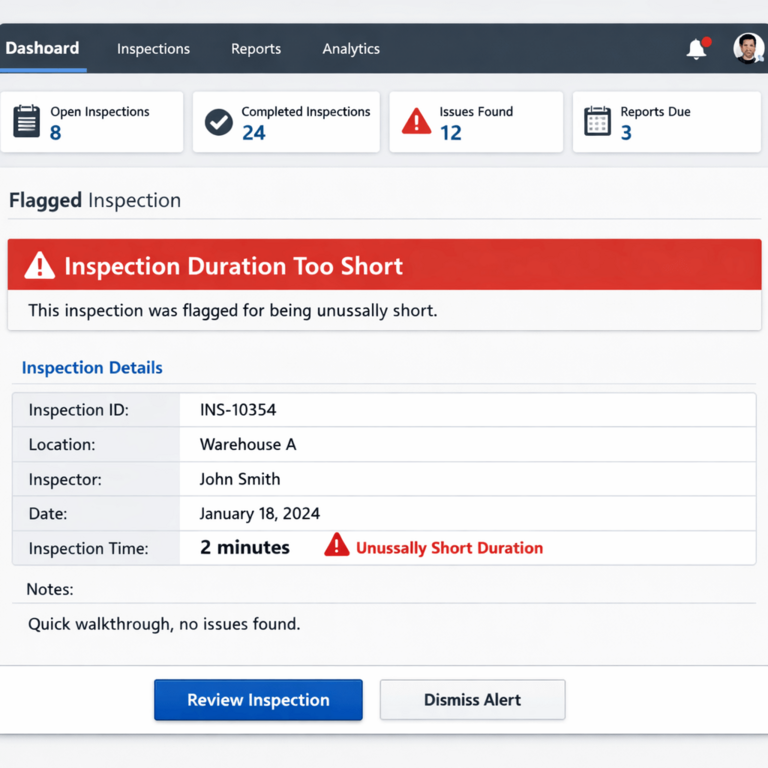
Figure 3: The system flagged this inspection instantly. 42 seconds is not enough.
Dave didn't fire them. He just pulled them aside and showed them the data. "Hey guys, the system flags this. Just slow down a bit." Overnight, the inspections became real. They started finding bald tires and loose lug nuts before they turned into roadside violations. The software acted as the "bad guy" so Dave didn't have to.
6. The Trailer Black Hole
We can't talk about medium fleets without talking about trailers. Tractors usually get love because the driver sits in them. But trailers? They are orphans. They get dropped, hooked, and forgotten by the "yard jockey."
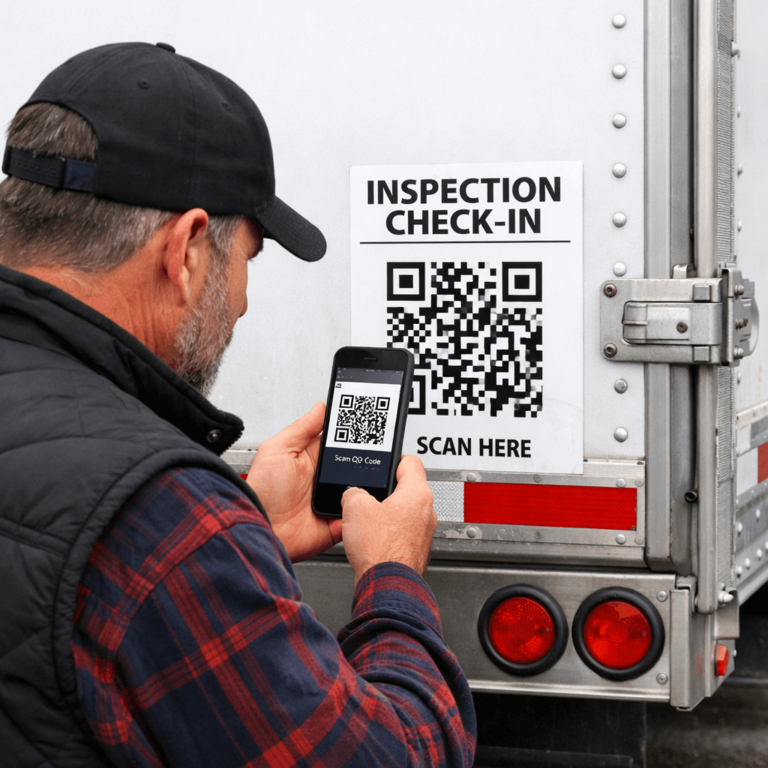
Figure 4: A simple barcode scan forces the driver to inspect the specific trailer they are hooking.
Before automation, Midwest Freight had no idea when a trailer was last inspected. Paper forms for trailers often stayed in the document tube on the nose of the trailer (where they turned into wet mush). Now, every time a driver hooks a trailer, they scan the barcode. The system forces a quick inspection. They went from 40% trailer compliance to 100% in two weeks. No more "deadlined" trailers sitting in the customer's lot.
7. ROI Analysis: Cost Savings for Medium Fleets
Let's talk money. Fleet owners don't like spending monthly subscriptions unless there is a return. Here is the napkin math Dave did:
- Cost of Paper Books: $50/month (approx).
- Cost of Admin Time Saved: 10 hours @ $30/hr = $300/week ($1,200/month).
- Cost of Potential Fines: $0 (Priceless).
Even ignoring the fines, the labor savings alone ($1,200/mo) drastically outweighed the cost of the software. It was an instant ROI. And that doesn't count the fuel saved by maintanance issues being caught earlier (like underinflated tires). Verify the official FMCSA 396.11 DVIR requirements here.
Why "Medium" is the Hardest Size
If you have 1 truck, you can use a notebook. If you have 500 trucks, you have a dedicated IT team and a massive budget.
But if you have 20 trucks? You are in the squeeze. You need enterprise-grade compliance, but you need it to be simple and affordable. That is exactly where automated DVIR solutions for medium-sized fleets fit in. You don't need a sledgehammer; you need a scalpel.
Conclusion: Stop the Paper Chase
The transition at Midwest Freight wasn't without bumps. One driver forgot his password three times. The Wi-Fi in the shop needed a booster. But 30 days later, Dave told us:
"I will never go back to paper. I honestly don't know how we did it before. It's like switching from a map to GPS."
If you are managing 10, 20, or 50 trucks, look at your desk right now. If you see a pile of paper, you are wasting money. It's 2026. Let the robots handle the paperwork so you can handle the trucks.
Reclaim Your Monday Mornings
Join fleets like Midwest Freight. Save 10+ hours a week.
Try PTI4YOU free for 15 days. No credit card required.
Start Your 15-Day Free Trial – No Credit Card RequiredZero setup fees. Zero hardware. 25-minute driver onboarding.
Frequently Asked Questions
What defines a "medium-sized" fleet?
Typically, we define a medium fleet as 10 to 99 vehicles. This is the stage where manual processes break down, but enterprise software (like SAP or Oracle) is too expensive and complex.
Does this work for mixed fleets (Vans/Trucks)?
Yes. Automated DVIR solutions are flexible. You can have a Class 8 checklist for your semis and a lighter checklist for your Sprinter vans or pickups within the same app. This consolidates all your data into one dashboard.
What happens if the driver has no signal?
This is critical. Good software (like ours) works offline. The driver completes the inspection, and the app stores the data securely. It automatically uploads the data once they hit a cell tower or Wi-Fi, ensuring no data is lost in dead zones.
How does this help with scheduling PMs?
Since the digital DVIR tracks mileage (via odometer input or ELD integration), the system can alert you when a truck is nearing its PM interval (e.g., 500 miles until oil change). This moves you from reactive repairs to proactive maintenance.