Key Takeaways for Drivers & Fleet Owners
- Record-Shattering OOS Rate: The final 2026 Roadcheck data recorded 15,952 inspections, 27,222 violations, and a devastating 32.8% out-of-service rate—nearly double the 18.1% rate from 2025.
- Day 2 Volume Exploded: Tuesday's enforcement nearly tripled Monday's volume, adding 4,826 new inspections and 1,559 OOS orders in a single day. If your truck was on the road, you faced a much higher chance of being pulled over.
- Cargo Securement Under Fire: Degraded straps, inadequate tiedowns, and ignored Working Load Limits triggered massive OOS spikes—especially for flatbed and step-deck operators.
- ELD Manipulation Exposed: Inspectors aggressively detected ghost drivers, GPS spoofing, and personal conveyance abuse. Individual stops yielded up to 22 driver violations.
- Brakes Still Kill Compliance: Brake system violations remain the #1 vehicle OOS trigger. The 20% defective brake rule means just two bad brakes on a standard 18-wheeler grounds your entire rig.
The 2026 Roadcheck Shattered Every Benchmark
The commercial transportation sector has just endured one of the most intense regulatory enforcement events in its modern history. The Commercial Vehicle Safety Alliance (CVSA) International Roadcheck unfolded as a 72-hour high-visibility, high-volume inspection initiative spanning May 12 through May 14, 2026, conducted simultaneously across the United States, Canada, and Mexico. This annual event is the largest targeted enforcement program concerning commercial motor vehicles in the world, historically averaging approximately 15 trucks and motorcoaches inspected every minute over the 72-hour period.
For the 2026 iteration, the CVSA designated two specific points of emphasis based on escalating industry vulnerabilities: electronic logging device (ELD) tampering, falsification, or manipulation on the driver side, and cargo securement on the vehicle side. These dual focus areas were chosen in direct response to alarming trends identified by the Federal Motor Carrier Safety Administration (FMCSA), where sophisticated electronic spoofing and fundamental load securement neglect led to a statistically significant rise in severe roadway incidents over the trailing twelve months.
But the final numbers tell a far more disturbing story than anyone anticipated. As the full scope of the DOT Blitz Week (May 10 through May 17, 2026) was finalized and reconciled, the conclusive magnitude of the enforcement landscape became clear: 15,952 total inspections, 27,222 total violations, and 5,244 out-of-service orders across 11,687 uniquely inspected commercial carriers. The final OOS rate of nearly 33% represents a catastrophic escalation from the 18.1% benchmark established just twelve months prior.
If you are a driver or a fleet owner, these are not abstract numbers. They are a direct warning. One in three inspected trucks was immediately grounded. This article dissects exactly what happened, where trucks failed, and precisely what you need to do right now to protect your livelihood.
Day 2 Nearly Tripled Day 1: What the Volume Surge Means for You
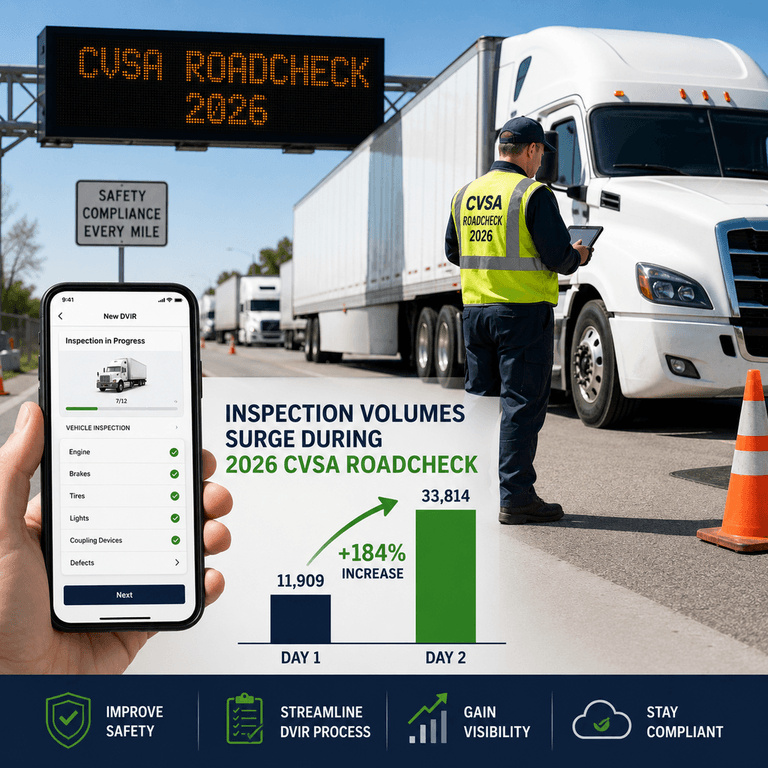
Day 2 enforcement nearly tripled Day 1 volume, with 4,826 new inspections and 8,373 violations logged in a single day.
One of the most critical findings of the 2026 Roadcheck is the staggering enforcement escalation between Day 1 and Day 2. Understanding this pattern is essential for every driver and fleet owner planning future operations during CVSA enforcement events.
Day 1 (Monday, May 12) established an elevated baseline. Across 1,580 initial inspections involving 1,417 distinct carriers, enforcement personnel logged 2,637 total violations and issued 496 OOS orders. This opening salvo generated an average of 1.67 violations per inspection and established an already alarming 31.4% out-of-service rate—immediately running substantially higher than the 2025 benchmark of 18.1%.
Day 2 (Tuesday, May 13) introduced an unprecedented enforcement surge that few in the industry anticipated. Tuesday's operations nearly tripled the volume of Day 1, adding approximately 4,826 new inspections, 8,373 violations, and 1,559 OOS orders to the cumulative count. This massive influx of regulatory action pushed the Day 2 OOS rate to an approximate 32.3%, elevating the daily violations-per-inspection metric to 1.73.
By the conclusion of Day 2, the cumulative statistics encompassed 6,406 total inspections, yielding 11,010 recorded violations and 2,055 out-of-service mandates across 5,217 distinct motor carriers.
| CVSA Roadcheck 2026 Progression | Inspections | Total Violations | OOS Orders | OOS Rate |
|---|---|---|---|---|
| Day 1 (May 12) | 1,580 | 2,637 | 496 | 31.4% |
| Day 2 (May 13) | 4,826 | 8,373 | 1,559 | 32.3% |
| Cumulative (Days 1 & 2) | 6,406 | 11,010 | 2,055 | 32.1% |
| Final Full-Week Blitz | 15,952 | 27,222 | 5,244 | 32.8% |
What this means for you as a driver: If you assumed Monday would be the "heavy" day and relaxed on Tuesday, you were wrong—and potentially grounded. The data proves that enforcement ramps up dramatically after Day 1. Inspectors use Monday to calibrate their operations, deploy additional mobile checkpoints, and reposition assets. By Tuesday, the enforcement net is fully deployed and operating at maximum capacity.
What this means for fleet owners: The historical OOS benchmarks have been obliterated. For the past decade, the trucking industry maintained a vehicle OOS rate hovering near 20%. The 2025 Roadcheck settled at 18.1%. The 2026 rate of 32.8% represents a near-doubling of industry failure rates. Transportation experts universally note that this catastrophic gap cannot be attributed to geographic enforcement concentration or inspector behavior alone—it reflects a material and severe degradation in the physical condition of commercial trucks on North American highways, paired with systemic breakdowns in motor carrier safety cultures.
Where Trucks Are Failing: The Violation Data Breakdown
Beyond the headline OOS rate, the granular violation data reveals exactly which vehicle systems are destroying fleets at the scale house. When a DOT officer slides under a trailer on a creeper, they are evaluating the effectiveness of your daily inspection culture. The 2026 data indicates a profound failure across the industry.
The 20% Defective Brake Standard: The Silent Fleet Killer
Historically, brake system violations account for the largest slice of the OOS pie, and 2026 was no exception. Brake components generated over 5,500 OOS citations during the 2025 Roadcheck alone, representing over 41% of all vehicle out-of-service findings. The 2026 data shows this pattern intensifying.
The most legally perilous and widely misunderstood regulation enforced during Level I inspections is the FMCSA's "20% defective brakes" standard. This rule dictates that if 20% or more of the service brakes on a vehicle or combination vehicle exhibit a critical defect, the entire combination is immediately placed out of service. For a standard 18-wheel, five-axle tractor-trailer configuration containing ten brake assemblies, this threshold is crossed if merely two individual wheel ends demonstrate an OOS condition.
The definition of a defective brake is exceptionally strict: excessive pushrod travel beyond the legal stroke limits, cracked or missing brake linings, oil or grease saturation on the friction material, audible air leaks originating from the brake chamber, or a missing slack adjuster. Out-of-adjustment pushrods, chafing air hoses, audible air leaks, and cracked brake drums were ubiquitous in the 2026 data. These are not invisible defects—these are glaring mechanical failures that any competent driver should catch during a legitimate pre-trip inspection.
When a CVSA inspector applies an OOS sticker for a 20% brake violation, the driver cannot simply climb under the chassis with a wrench, tighten the slack adjuster, and drive away. The law mandates that the vehicle must remain physically immobilized until a fully qualified, commercially certified diesel technician is dispatched to the location. The mechanic must execute the repair, recalibrate the pneumatic system, and generate a formalized service invoice. Only when this documentation is presented to the enforcement officer can the OOS order be legally lifted.
Tires, Lighting, and the Basics
Bald tires (tread depth below 4/32 of an inch on steer axles or 2/32 on drive/trailer axles), exposed fabric, and sidewall cuts resulted in thousands of sidelined trucks. Furthermore, inoperative turn signals, brake lights, and clearance lamps were cited at an alarming rate. Every one of these defects is something a driver can see and touch during a proper walk-around.
The Worst Single Inspections of 2026
The specific inspection data from the FMCSA registry illustrates the sheer scale of mechanical negligence in the worst cases. The single worst recorded inspection of the entire 2026 Blitz Week occurred in Kansas (Inspection ID 0450000472): 38 total violations, 36 vehicle-specific violations, and 11 separate out-of-service conditions levied against a single truck. A Connecticut inspection on May 13 mirrored this disaster, uncovering 37 total violations and 11 OOS orders. A New Jersey inspection recorded 30 total violations, 28 of which were mechanical.
| Worst Vehicle Inspections (Blitz Week 2026) | State | Total Violations | Vehicle Violations | OOS Orders |
|---|---|---|---|---|
| Inspection #0450000472 | Kansas | 38 | 36 | 11 |
| Inspection #3084000299 | Connecticut | 37 | 29 | 11 |
| Inspection #SPEPI02245 | New Jersey | 30 | 28 | N/D |
| Inspection #1118008032 | Alabama | 30 | 30 | N/D |
| Inspection #3025006436 | Connecticut | 28 | 28 | N/D |
In the most extreme instance of isolated OOS severity, an inspection in Pennsylvania recorded 14 distinct out-of-service conditions confined to a single commercial combination. These vehicles were grounded due to a compounded, systemic collapse of safety-critical hardware: catastrophic air brake leaks, severed brake hoses, structurally compromised steering linkages, tires worn well past legal limits, exposed casing plies, and entirely inoperative lighting systems.
The Vehicle Focus: Cargo Securement Under the Microscope
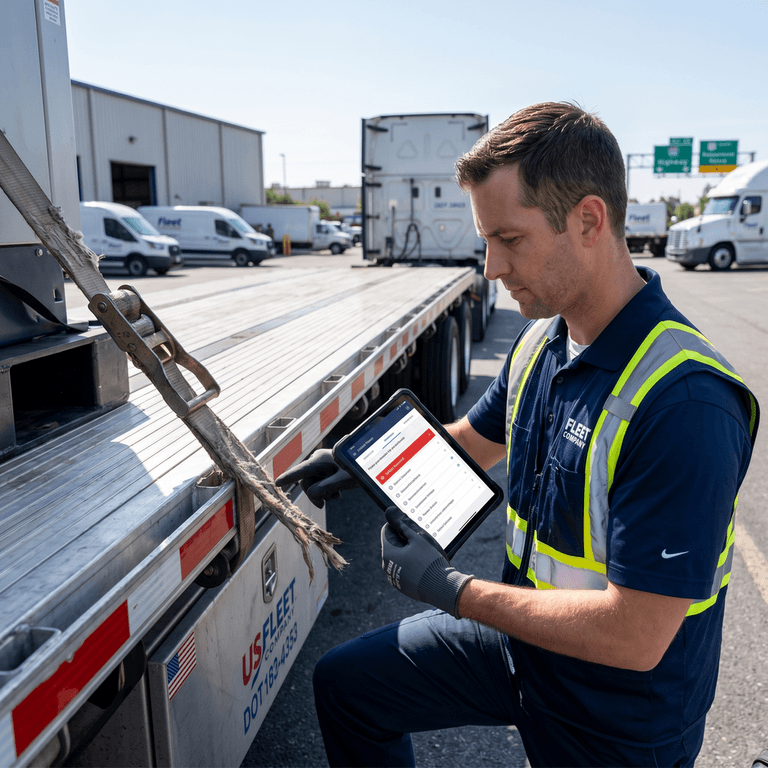
Cargo securement failures—especially degraded straps and inadequate tiedown counts—were a primary OOS trigger during the 2026 Roadcheck.
The CVSA designated cargo securement as the 2026 vehicle focus area for a critical reason: when thousands of pounds of industrial materials, lumber, or steel shift dynamically during transit, the physics of the commercial motor vehicle are fundamentally altered. This instability compromises the driver's ability to maneuver, brake, or execute evasive steering. When tiedowns fail, cargo spills into active traffic lanes, transforming into deadly kinetic projectiles. In 2025, inspectors issued over 18,100 violations for leaking, spilling, or falling cargo, and an additional 16,054 citations for unsecured dunnage and loose vehicle components.
Under FMCSA Part 393, the rules governing how freight is anchored to a commercial motor vehicle are meticulously detailed. Yet, the 2026 Roadcheck revealed that complacency has deeply infected this critical operational aspect, particularly among flatbed, step-deck, and specialized hauling fleets. Inspectors focused heavily on the Working Load Limit (WLL) of tiedowns—a tiedown is only as strong as its weakest component.
The highest frequency of cargo securement OOS violations during the May 2026 event included:
- Degraded Synthetic Webbing: Straps exhibiting cuts, burns, holes, or severe abrasion exceeding allowable tolerances. Many drivers failed to inspect their straps prior to loading, assuming "they were fine yesterday." This is the most common and most preventable violation.
- Inadequate Number of Tiedowns: Failing to meet the minimum tiedown requirements based on the length and weight of the article being transported. A common failure pattern: drivers ignored the rule requiring an additional tiedown for every 10 feet of article length beyond the initial 5 feet.
- Failure to Prevent Forward Movement: Heavy loads lacking a front header board or adequate blocking/bracing, meaning in the event of hard braking, the load would shift forward, potentially crushing the tractor cab. This violation carries the most severe safety implications and the highest fines.
- Edge Protection Neglect: Synthetic straps severed by sharp edges of the cargo due to the driver's failure to deploy physical edge protectors, rendering the strap's WLL effectively zero. A $5 rubber edge protector could have prevented a $3,000 OOS fine.
For drivers hauling flatbed: Before you leave the yard or the shipper's dock, walk every strap. Run your hand along it. If you feel a cut, a burn mark, or fraying—throw it away and grab a new one. Check your anchor points for rust and deformation. Count your tiedowns against the FMCSA requirement. This five-minute check is the difference between delivering your load and sitting on the shoulder of I-81 waiting for a mobile mechanic.
The Driver Focus: ELD Tampering Crackdown
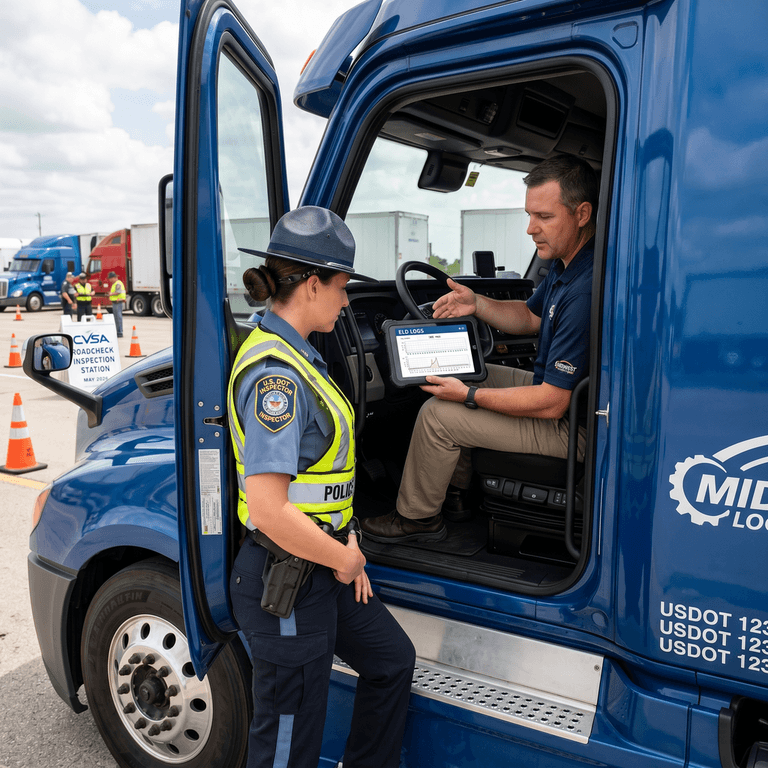
Inspectors executed sophisticated digital forensic audits on ELD data, cross-referencing timestamps against fuel receipts, GPS pings, and toll records.
The CVSA specifically designated ELD tampering as the 2026 driver focus area, and the enforcement was brutal. This targeted crackdown was a direct response to the preceding year's data, wherein falsification of records of duty status erupted as the second most-cited driver violation in North America, comprising over 58,000 specific citations.
The most shocking revelation from the Roadcheck was not just the frequency of driver violations, but their extraordinary density within individual traffic stops. During Day 1, inspectors logged five separate stops that generated seven or eight distinct driver-specific violations in a single encounter. By Day 2, the situation escalated into absolute documentation collapse:
- An inspection in Alabama (ID 1440004561) uncovered a staggering 17 driver violations within a single cab.
- A concurrent inspection in Idaho mirrored this exact failure rate, also yielding 17 driver violations.
- A Michigan inspection (ID ZYLSJ01647) shattered all event records by generating an incomprehensible 22 driver violations during a single encounter.
Regulatory experts are clear: a 22-violation driver inspection is never the result of a single innocent clerical error. These massive citations represent a toxic convergence of expired credentials, gross hours-of-service infractions, and systematic, deliberate ELD manipulation occurring simultaneously.
The Specific Tactics Inspectors Uncovered
CVSA-certified officers executed sophisticated digital forensic audits. They are trained to detect "Perfect Log Syndrome"—electronic logs that display patterns of driving, resting, and loading so geometrically flawless they defy the chaotic realities of modern freight movement. Inspectors ruthlessly cross-reference ELD data against timestamps on fuel receipts, bills of lading, GPS pings, and toll plaza transponder records.
The primary tactics uncovered included:
- Ghost Drivers & Unauthorized Logins: Drivers utilizing co-driver profiles or fabricated secondary logins to extend their driving windows well beyond the 11-hour and 14-hour limits.
- Personal Conveyance Abuse: Intentionally misclassifying loaded, revenue-generating drive time as "Personal Conveyance" (Off-Duty driving) to advance a load while preserving legal driving hours.
- GPS Spoofing & Hardware Disconnects: Physically unplugging the ELD from the truck's Engine Control Module (ECM) or utilizing software to spoof geolocational data, creating massive gaps in odometer and engine-hour records.
- Unassigned Driving Time: Carriers failing to reconcile miles driven without an active driver login, resulting in direct audits on the motor carrier's back-office compliance personnel.
The Financial Penalties Are Severe
ELD falsification is not treated as a paperwork error—it is a willful safety violation. When an inspector determines that required records are inaccurate or false, the motor carrier faces immediate civil penalties of up to $1,584 per day. Depending on severity and intent, fines can compound to a maximum of $15,846. In scenarios involving willful, coordinated evasion, fines can reach $16,000 per violation, accompanied by immediate OOS orders and the potential for federal criminal prosecution.
Compounding this crisis is the mass ELD revocation wave. Between January and March 2026, the FMCSA unilaterally removed 27 distinct electronic logging devices from its authorized registry—an 80% increase in device decertification compared to 2025. If your fleet is still running a revoked device past the 60-day grace period, the agency treats you as if you're operating completely without an ELD. During the May 2026 Roadcheck, numerous carriers using dead legacy devices were flagged and suffered automatic OOS on every dispatched mile.
Geographic Enforcement: The High-Risk Freight Corridors
The deployment strategy of CVSA personnel is not randomized—it is intricately designed to intercept maximum commercial freight volume. Analyzing the geographical distribution of the 15,952 final inspections provides fleet owners with invaluable spatial intelligence for routing and risk mitigation.
Pennsylvania established absolute dominance over the 2026 enforcement landscape. Through Day 2 alone, Pennsylvania ran 1,156 cumulative inspections, meaning the state executed approximately 939 rigorous examinations on a single Tuesday—accounting for nearly 20% of the entire national volume for that day. By the conclusion of the blitz, Pennsylvania recorded a staggering 2,155 total inspections, towering over every other jurisdiction.
| State | Total Inspections | Key Highway Corridors |
|---|---|---|
| 1. Pennsylvania | 2,155 | I-76, I-78, I-81 Northeast Corridors |
| 2. Oklahoma | 1,142 | I-40, Turnpike Intersections |
| 3. North Carolina | 954 | I-95, I-85 Mid-Atlantic Arteries |
| 4. Texas | 908 | I-10, I-35 Southern Transcontinental |
| 5. Kentucky | 668 | I-65, I-75 Central Freight Hubs |
| 6. Alabama | 640 | I-65, I-20 Southern Logistics |
| 7. Illinois | 609 | I-80, I-90 Midwest Crossroads |
| 8. New Jersey | 599 | Port Proximity, Northeast Urban |
| 9. Michigan | 488 | Cross-Border, Industrial |
| 10. New Mexico | 432 | I-40 Transcontinental |
The critical insight for fleet dispatchers: The concentration of inspections in Pennsylvania, Oklahoma, and North Carolina accounted for over 26% of all national stops. But there's a crucial dichotomy between enforcement volume and enforcement intensity. While Texas processed over 900 vehicles, severity metrics indicate that New Jersey and Pennsylvania generated the highest per-inspection violation totals. Inspectors along the I-78 and I-81 corridors in the Northeast were not waving trucks through cursory checks—they were executing exhaustive physical audits, uncovering deep latent mechanical defects.
For any driver dispatched through these specific hyper-enforcement zones: do not assume you'll bypass the scale. Do your pre-trip properly. Check every brake, every strap, every light. Your CDL and your fleet's operating authority depend on it.
Carrier Performance: Who Passed and Who Got Crushed
The unprecedented transparency afforded by live FMCSA data during the 2026 Roadcheck publicly illuminated specific carrier compliance postures. The data reveals a profound divide between organizations with automated daily compliance architectures and those relying on reactive, paper-based methodologies.
The Carriers That Thrived
Despite processing massive freight volumes through the heaviest enforcement corridors, major fleets demonstrated extraordinary resilience:
- UPS (DOT #21800): 78 inspections, 53 violations, elite 9% OOS rate
- FedEx (DOT #86876): 65 inspections, 72 violations, 9% OOS rate
- J.B. Hunt (DOT #80806): 60 inspections, 12% OOS rate
- New Prime (DOT #3706): 53 inspections, pristine 4% OOS rate
- Werner Enterprises (DOT #53467): 49 inspections, 12% OOS rate
These fleets consistently maintained OOS rates below 12% while the national average soared to nearly 33%. This is not luck—it is the exclusive byproduct of massive investments in digital fleet management, real-time telematics, and rigid pre-trip inspection enforcement.
The absolute platinum standard came from Autobuses Ejecutivos LLC (DOT #1044521), which flawlessly executed 23 separate Level I inspections without recording a single violation—a mathematically perfect 0% OOS rate. Passing DOT inspections at this volume is never an accident. It proves that the organization enforces legitimate, physical pre-trip inspections, immediately removes defective assets from service, and utilizes robust eDVIR software.
The Carriers That Got Crushed
Conversely, the data ruthlessly exposed fleets operating with systemic compliance degradation:
- PK Logistix LLC (DOT #4521723): 16 inspections, 63 violations, devastating 69% OOS rate—11 of 16 trucks grounded
- P&S Transportation LLC (DOT #1243338): 19 inspections, 42% OOS rate
- Operadora de Transporte Internacional (DOT #683428): 10 inspections, 40% OOS rate
- CRST Expedited Inc. (DOT #53773): 14 inspections, 36% OOS rate
- Evans Delivery Company (DOT #38111): 31 inspections, 90 violations, 29% OOS rate
For small fleet owners: If your OOS rate looks anything like the bottom of this list, your insurance underwriter already knows. Your CSA scores are public. Premium freight brokers using automated onboarding software will blacklist your company the moment your safety metrics cross their thresholds. The difference between a 9% OOS rate and a 69% OOS rate is not money—it's whether your company survives the next 12 months.
The Real Cost of an OOS Order for Your Fleet
For a small fleet operator or an owner-operator, reading about OOS percentages can feel abstract. Let's make it brutally concrete. When a red OOS sticker is applied to your truck, the financial bleeding begins immediately:
- The Towing/Mobile Mechanic Bill: You cannot drive the truck to a shop. You must dispatch a mobile mechanic to the scale house or tow the vehicle. Mobile diesel mechanics routinely charge $150–$250 per hour, plus massive call-out fees, and mark up replacement parts significantly. A roadside brake repair can easily exceed $1,500–$3,000.
- The Freight Delay Penalty: Your load will be late. If you're hauling just-in-time manufacturing components or perishable goods, the broker or shipper may levy severe penalties or file a freight claim for the total value of the load.
- The Fine: The civil penalty from the state or federal government. ELD falsification alone can reach $16,000 per violation.
- The Invisible Tax — Insurance & Contracts: Every violation is uploaded to the FMCSA's Safety Measurement System. Your CSA scores spike. When your insurance renews, the underwriter sees Vehicle Maintenance and HOS Compliance flags and raises your premiums by 20% to 40%. Premium freight brokers automatically blacklist your company, cutting off access to high-paying loads.
A single failed Level I inspection can easily cost a small fleet owner between $3,000 and $15,000 in immediate and deferred expenses. Preventive maintenance and strict daily inspections are not a cost center—they are an absolute financial shield.
What Carriers Should Expect Next
The 2026 Roadcheck is over. But here's what every fleet owner and driver needs to understand: the enforcement pressure is not going away. In fact, it's about to intensify.
- Targeted Follow-Up Audits: The FMCSA uses Roadcheck data to identify carriers for targeted terminal audits. If your fleet received multiple OOS orders during the blitz, expect a formal compliance review letter within 60–90 days. The agency will request 90 days of DVIRs, maintenance records, and ELD data.
- CSA Score Recalculation: The 27,222 violations from the Roadcheck will be processed into the SMS database over the coming weeks. Carriers will see their BASIC scores shift dramatically. If your Vehicle Maintenance or HOS Compliance BASIC breaches the 65% intervention threshold, you will be flagged for a formal warning letter.
- Insurance Premium Shock: Underwriters monitor CVSA enforcement events in real-time. Fleets with Roadcheck violations can expect premium increase notifications at their next renewal cycle.
- Year-Round Random Inspections: The CVSA Roadcheck may be the marquee event, but random DOT inspections happen every single day at every weigh station in North America. The same Level I inspection that grounded trucks during the Roadcheck is identical to the one conducted at a random scale house on a Thursday afternoon in July.
How to Prepare: A Driver and Fleet Owner Survival Guide
The 2026 data provides the exact blueprint for what to fix. Here is your actionable survival checklist:
For Drivers
- Actually Do Your Pre-Trip. Not just the paperwork—the physical walk-around. Get under the truck. Check every pushrod. Measure brake stroke. Look at every tire sidewall. Touch every strap. This is your career insurance policy.
- Inspect Your Cargo Securement Gear Before Loading. Walk your straps. If a strap shows any sign of cuts, burns, abrasion, or fraying—throw it away immediately. Don't wait until you're at a weigh station to discover a strap with a WLL of zero.
- Never Manipulate Your ELD. Inspectors are trained forensic auditors. They cross-reference your logs against GPS, fuel receipts, and toll records. "Perfect Log Syndrome" is a red flag, not a defense. The $16,000 fine, the CSA score destruction, and the potential criminal prosecution are not worth the extra miles.
- Keep Documentation Current. Your CDL, medical card, and registration must be accessible and current. An expired medical certificate is an immediate OOS violation that has nothing to do with your truck's condition.
- Know Your High-Risk Routes. If you're running through Pennsylvania, Oklahoma, North Carolina, or New Jersey during any enforcement period, assume you will be inspected. Prepare accordingly.
For Fleet Owners and Safety Directors
- Audit the Auditors. Don't blindly trust your drivers' DVIRs. Conduct random, physical yard audits. Walk out to a truck that a driver just marked "No Defects" and physically inspect the brake pushrods and cargo tiedowns. If you find a defect they missed, it's mandatory retraining time.
- Enforce ELD Discipline Relentlessly. Review unassigned driving time and personal conveyance usage in your ELD portal weekly. Address anomalies with drivers immediately—before a DOT investigator does it for you.
- Standardize Cargo Securement Gear. Implement a strict replacement policy. If a strap shows any degradation, replace it. A $30 strap is infinitely cheaper than a $3,000 OOS fine and a crushed cab.
- Verify Your ELD Is Still Certified. Check the FMCSA's revoked devices registry quarterly. The 27 devices removed in Q1 2026 caught many fleets off guard. If your hardware is revoked, you have 60 days to replace it—period.
- Deploy Spatial Intelligence. Integrate the geographic enforcement data into your routing logic. When dispatching through hyper-enforcement corridors, send your best equipment and most compliant drivers, supported by pre-trip photographic verification.
- Digitize Everything. Transition entirely away from paper DVIRs. The administrative burden is a silent killer of small business profitability. Adopt lightweight cloud solutions to centralize your safety data and eliminate the documentation gaps that trigger OOS violations.
Why Paper DVIRs Are Dead After 2026
A stark division emerged in the 2026 Roadcheck data between fleets utilizing paper DVIRs and those utilizing modern electronic solutions. Paper-based fleets suffered catastrophically during inspections for several distinct reasons.
First, paper logs are inherently fragile. Inspectors frequently cited drivers for failing to produce the previous days' DVIRs simply because the thermal paper had faded in the sun, coffee was spilled on the binder, or the pages were lost in the chaotic cab of the truck.
Second, the "Missing Signature Loop" destroyed paper fleets. Under FMCSA 396.11 regulations, if a defect is noted on Monday, the mechanic must sign the paper certifying the repair, and the Tuesday driver must sign acknowledging the repair before driving. In paper systems, the mechanic fixes the truck but forgets to walk to the dispatch office to sign the physical paper. The Tuesday driver takes the truck. When pulled over, the DOT inspector looks at the paperwork: a defect was reported, but there is no mechanic signature on the repair certification. The truck is immediately placed Out-of-Service—even if the mechanical repair was actually performed perfectly.
The industry's behavioral failure has a name: "pencil whipping." As we detailed in our guide on how technology stops fake DVIRs, when drivers rapidly check boxes on a paper form without actually looking at the equipment, the fleet owner assumes all the legal and financial liability when the DOT inspector inevitably finds the truth. This is how a truck accumulates 38 critical defects without detection: the driver was never actually inspecting the vehicle.
The regulatory environment has caught up. Effective March 23, 2026, the FMCSA implemented a Final Rule (Docket FMCSA-2025-0115) that explicitly clarified and authorized the use of electronic DVIRs. Digital signatures applied by drivers and mechanics are now deemed fully legally binding under federal E-SIGN laws, completely replacing analog carbon-copy logs.
Why Your Fleet Needs Electronic DVIRs Now
To survive the harsh regulatory climate of 2026 and prepare for the upcoming new FMCSA rules, adopting electronic DVIR software is no longer optional. The 2026 Roadcheck data proves beyond any doubt that fleets still relying on paper forms, or juggling overpriced enterprise platforms they don't fully use, are hemorrhaging money and accumulating violations that threaten their operating authority.
The market is flooded with enterprise telematics giants that bundle ELDs, AI dashcams, GPS tracking, and DVIR modules into massive, expensive packages requiring proprietary hardware, multi-year contracts, and per-vehicle fees that can exceed $40–$75/month. For a mega-fleet running 500+ trucks, these platforms make sense. But for the small to medium fleet owner—the 5-to-50-truck operator who simply needs to pass a DOT audit, stop pencil whipping, and protect their CSA score—these enterprise solutions are catastrophically overbuilt and financially punitive.
That's exactly the gap PTI4YOU was designed to fill.
Why PTI4YOU Is the Right Tool for This Moment
We built pti4you.com specifically for the fleet operator who watched the 2026 CVSA Roadcheck results with dread. The one who knows that a single OOS order can cost $3,000–$15,000 in immediate and deferred expenses. The one who can't afford to gamble on paper forms, "ghost signatures," or an ELD platform that treats DVIR compliance as an afterthought.
PTI4YOU strips away the bloat of enterprise systems and focuses 100% on what actually keeps your trucks moving and your CSA scores clean:
- Zero Proprietary Hardware: Your drivers use their existing smartphones—iOS or Android. No $200–$400 hardware gateways. No installation appointments. No forced equipment upgrades.
- Automated Three-Signature Cycle: PTI4YOU enforces the FMCSA 396.11 closed-loop workflow automatically. When a driver reports a defect, the mechanic receives a digital work order. Once repaired, the mechanic signs off digitally. The next driver must review and acknowledge the repair before dispatch is unlocked. No more "missing signature loop" violations.
- Mandatory Photo Uploads: For critical components—brake chambers, cargo securement arrays, tire sidewalls—PTI4YOU mandates timestamped, GPS-tagged photographs. This physically proves the inspection occurred and makes pencil whipping technologically impossible.
- 90-Day Cloud Retention: Every inspection record is automatically stored in a secure cloud for the full federal retention period. During a DOT compliance review, export pristine, legally binding records in a single click—no scrambling through filing cabinets for faded thermal paper.
- 25-Minute Driver Onboarding: Your drivers don't need a computer science degree. The interface is built for the cab, not the boardroom. Average onboarding time from download to first completed inspection: 25 minutes.
- No Lock-In Contracts: No 3-to-5-year commitments. No early termination fees. Start your 15-day free trial and see the results before you spend a dollar.
The fleets that held 4%–12% OOS rates during the 2026 Roadcheck while the industry burned at 33% all share one trait: they've invested in digital compliance infrastructure that eliminates human error. PTI4YOU gives you that same infrastructure without the enterprise price tag.
For a detailed breakdown of how much electronic DVIR systems save compared to the hidden administrative drain of paper forms, read our Paper vs. Electronic DVIR Cost Calculator.
How PTI4YOU Shields You from DOT Penalties
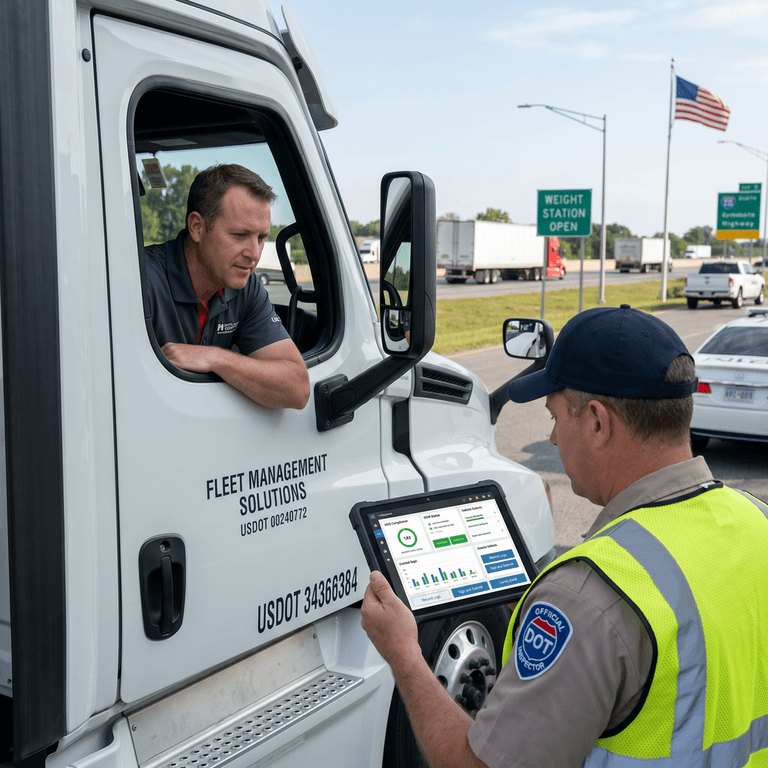
PTI4YOU's cloud dashboard delivers 100% compliance visibility with automated three-signature cycles and instant audit exports.
The 2026 Roadcheck proved that the FMCSA is no longer showing leniency for administrative errors. The "ghost signature" where a mechanic fixed a brake line but forgot to sign the paper DVIR is now an immediate ticket to an Out-of-Service penalty.
PTI4YOU solves this by digitizing the entire workflow. When a driver logs a frayed cargo securement strap or an audible air leak in the app, the fleet manager is instantly notified via the cloud dashboard. The mechanic receives a digital work order. Once the mechanic repairs the defect, they sign off within the app. The next morning, when the next driver opens the app to perform their pre-trip inspection, they are legally forced to review and digitally sign the mechanic's repair certification before they can begin their day.
This closed-loop, three-signature system is mathematically proven to eliminate the documentation errors that cause 80% of administrative DOT fines. During a targeted off-site DOT compliance review, fleet managers can export 90 days of pristine, timestamped, legally binding inspection records in a single click. No scrambling for faded paper receipts—just unassailable proof of a culture of safety.
Stop Fearing the Scale House
The CVSA Roadcheck may be over, but random DOT inspections happen every single day. Don't let a missing piece of paper or a pencil-whipped inspection ruin your CSA score and bankrupt your fleet.
- ✅ Zero hardware required – Use iOS or Android smartphones.
- ✅ Automated three-signature DVIR cycle prevents ghost signature violations.
- ✅ Mandatory photo uploads make pencil whipping impossible.
- ✅ 90-day cloud retention with one-click DOT audit exports.
Zero setup fees. Zero hardware. 25-minute driver onboarding.
Frequently Asked Questions
When was the 2026 CVSA International Roadcheck?
The 2026 CVSA International Roadcheck was a 72-hour high-visibility enforcement initiative that took place across the United States, Canada, and Mexico from May 12 through May 14, 2026. The broader DOT Blitz Week extended from May 10 through May 17, resulting in 15,952 total inspections.
What was the out-of-service rate for the 2026 CVSA Roadcheck?
The final full-week OOS rate settled at approximately 32.8%, a staggering increase from the 18.1% benchmark recorded during the 2025 Roadcheck. This means roughly one in three inspected trucks was grounded on the spot.
What were the focus areas for the 2026 CVSA Roadcheck?
For 2026, the CVSA designated two primary focus areas: ELD tampering, falsification, and manipulation (driver-side) and cargo securement (vehicle-side). However, brake system failures, tire violations, and lighting defects generated the highest volume of actual OOS orders.
What happens if a driver is caught tampering with an ELD?
Drivers caught tampering with or falsifying an ELD are immediately placed Out-of-Service under FMCSA Part 395. The motor carrier faces civil penalties up to $16,000 per violation, the fleet's CSA scores are severely degraded, and the incident can trigger a formal DOT compliance review or criminal prosecution.
How can fleet managers prevent Out-of-Service cargo securement violations?
Fleets should enforce strict pre-trip inspection protocols, train drivers on FMCSA Part 393 Working Load Limit and tiedown ratio rules, implement a strict strap replacement policy, and use electronic DVIR software to mandate photo-verified cargo securement checks before dispatch.
Which states had the most inspections during the 2026 Roadcheck?
Pennsylvania dominated with 2,155 total inspections, followed by Oklahoma (1,142), North Carolina (954), Texas (908), and Kentucky (668). These five states alone accounted for over 36% of all national inspections.
Are paper DVIRs still legal in 2026?
While paper DVIRs remain technically legal under federal law, they are a massive operational liability. The FMCSA explicitly authorized electronic DVIRs via a March 2026 Final Rule, and fleets using paper forms suffered disproportionately higher OOS rates during the Roadcheck due to lost records, faded ink, and the missing signature loop problem.
Conclusion: The Data Is Clear — Act Now or Get Grounded
The CVSA International Roadcheck of May 2026 represents a critical inflection point for every driver and fleet owner in North America. The exhaustive data from 15,952 inspections reveals a compliance landscape in acute distress. The final OOS rate of nearly 33%—a staggering escalation from the 18.1% benchmark just one year prior—lays bare the profound deterioration in vehicular mechanical fitness and the systemic collapse of driver documentation discipline.
The Day 2 enforcement surge, which nearly tripled Day 1 volume, proved that regulatory pressure is not static—it ramps up aggressively, catching unprepared carriers in a net that only grows wider. The manifestation of 17 to 22 driver violations within single traffic stops illuminates a crisis of accumulated errors and deliberate falsification. Concurrently, individual trucks harboring 38 critical violations prove that foundational mechanical maintenance—brakes, tires, lighting—remains the ultimate determinant of survival at the weigh station.
For drivers: your pre-trip inspection is not paperwork—it is the single most important thing you do every day. For fleet owners: the era of paper-based compliance and hoping to bypass the scales has definitively ended. The fleets that survived this Roadcheck—the ones holding 4% to 12% OOS rates while the industry burned at 33%—have one thing in common: they've invested in digital compliance infrastructure that makes pencil whipping physically impossible.
The choice is simple: invest in prevention today, or pay exponentially more at the scale house tomorrow. Your CDL, your operating authority, and your livelihood depend on the answer.