Introduction: The Illusion of "Cheap" Compliance
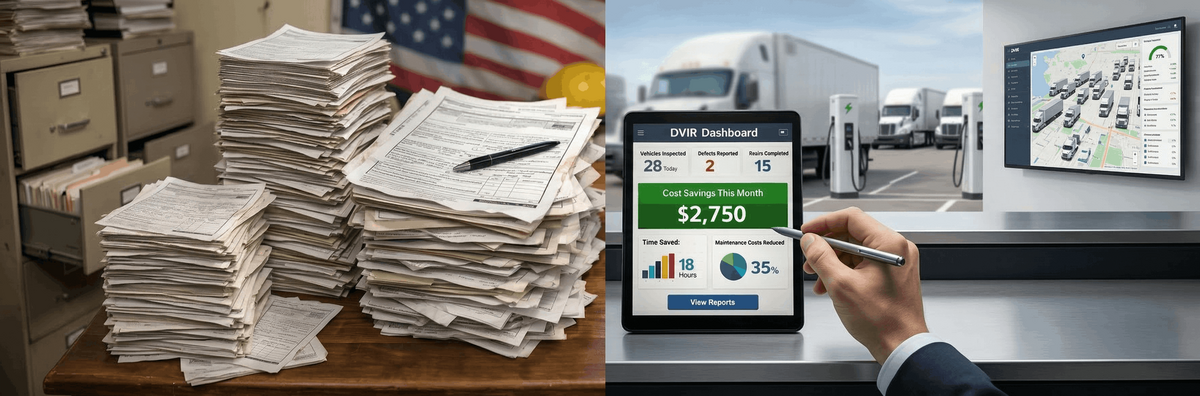
For decades, the standard procedure for conducting a Driver Vehicle Inspection Report (DVIR) involved a simple clipboard, a carbon-copy booklet, and a pen. In 2026, despite massive leaps in transportation technology, telematics, and digital freight matching, a surprising number of commercial motor vehicle (CMV) fleets still cling to this deeply outdated, manual method. Why? Because on the surface, a three-dollar paper logbook appears to be the most cost-effective solution available. Fleet owners look at the monthly subscription fee of a modern pre trip inspection software and balk, mistakenly believing they are saving money by sticking to the old ways.
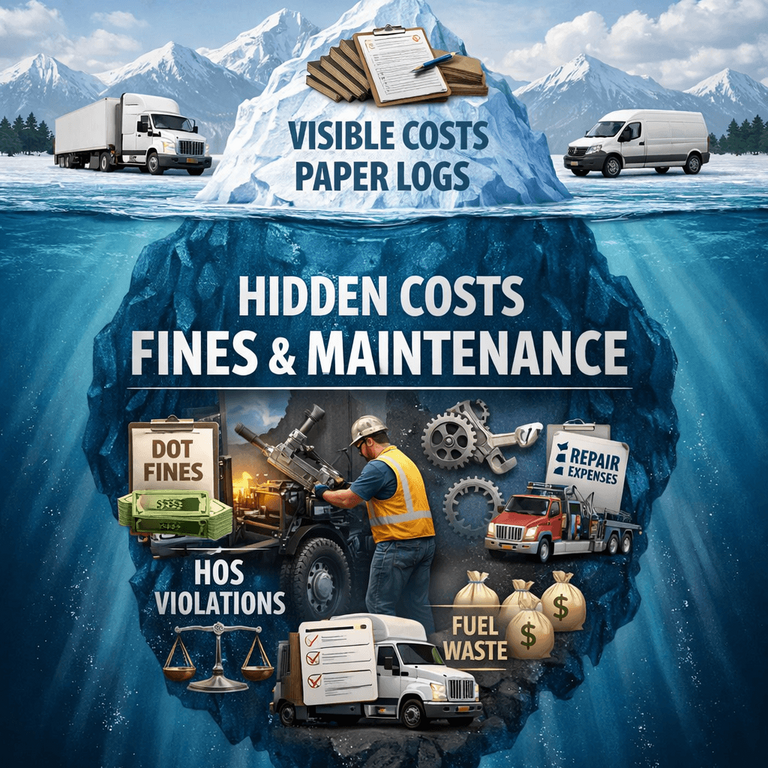
This is one of the most dangerous and expensive misconceptions in the modern logistics industry. The three-dollar booklet is merely the tip of a massive financial iceberg. Operating a fleet on paper in 2026 introduces catastrophic hidden costs, severe regulatory liabilities, and operational bottlenecks that actively drain profit margins. When you factor in administrative labor, lost documents, catastrophic unprevented breakdowns, and staggering Department of Transportation (DOT) fines, paper logs are exponentially more expensive than any premium software platform.
In this comprehensive guide, we will meticulously dismantle the financial illusion of paper DVIRs. We will break down every direct, indirect, and hidden cost associated with manual inspections, provide a step-by-step cost calculator for 10-truck, 50-truck, and 250-truck fleets, and demonstrate exactly how transitioning to an electronic dvir system generates a massive, undeniable Return on Investment (ROI).
Key Takeaways
- Paper is deceivingly expensive: While a booklet costs a few dollars, the administrative labor to process, review, and store it costs hundreds of dollars per truck annually.
- Compliance fines are soaring: In 2026, the Federal Motor Carrier Safety Administration (FMCSA) utilizes advanced data auditing. Paper forms with missing signatures or "form and manner" errors are easy targets for massive fines.
- Pencil whipping is a financial liability: Paper forms cannot verify physical compliance. Drivers skipping physical inspections lead directly to expensive, preventable roadside breakdowns.
- eDVIR software pays for itself: Most fleets achieve full ROI on digital inspection software within 3 to 6 months through labor savings and reduced maintenance costs.
What is the true hidden labor cost of paper DVIR books per truck?
While a paper DVIR booklet itself costs only $3–$5 upfront, the true cost includes shipping, secure physical storage under 49 CFR 396.11, and extensive administrative data entry. When hidden operational expenses and labor hours are modeled correctly, managing paper logs effectively costs a fleet upwards of $600 per truck, per year.
Let us begin by analyzing the absolute baseline costs—the physical elements required to maintain a paper DVIR system. These are the easiest expenses to quantify, yet they are rarely tracked accurately by fleet accounting departments.
1. The Booklets Themselves
A standard daily DVIR logbook contains 31 sets of carbon-copy pages. For an over-the-road (OTR) driver working year-round, that equates to roughly 12 to 14 booklets per year. A high-quality, FMCSA-compliant booklet generally costs between $3.00 and $5.00 depending on bulk order discounts. Therefore, the baseline physical cost is roughly $40 to $70 per driver, per year. For a fleet of 100 trucks, you are spending $4,000 to $7,000 annually just on the physical paper.
2. Shipping and Distribution
Paper does not magically appear in the cab of a truck. Booklets must be shipped from the supplier to the main terminal, and then distributed to regional terminals or directly to drivers. If a driver runs out of logs on the road, dispatch must overnight a new book or the driver must purchase an overpriced book at a truck stop. Shipping and logistics for paper distribution can easily add another $15 to $25 per driver, per year.
3. Physical Document Storage
Under FMCSA 49 CFR § 396.11, motor carriers are legally required to retain the original copy of each DVIR and the certification of repairs for a minimum of three months (90 days) from the date the written report was prepared. While three months sounds brief, for a 250-truck enterprise fleet, that is 22,500 individual pieces of paper that must be securely filed, organized by vehicle number, and kept readily accessible for a DOT auditor at a moment's notice.
This requires physical filing cabinets, dedicated office floor space, heavy-duty binders, and in many enterprise cases, costly off-site secure document storage facilities (like Iron Mountain). The cost of physical storage—factoring in office square footage and organizational supplies—averages out to roughly $20 per truck, per year.
Subtotal Direct Physical Costs: Approximately $75 to $115 per truck, per year. For a 100-truck fleet, that is a baseline cost of $7,500 to $11,500 before a single human hour of labor is factored in.
The Administrative Black Hole: Lost Labor and Data Entry
The physical cost of paper is negligible compared to the colossal waste of human capital required to process it. Paper is a "dumb" medium; it cannot analyze itself, alert a mechanic, or file itself away. Every action requires manual human intervention.
Imagine the daily lifecycle of a paper DVIR in a mid-sized fleet terminal:
- Collection: Drivers returning to the terminal drop their messy, grease-stained logbooks into a physical inbox on the dispatcher's desk. Some drivers forget and leave them in the cab. The safety manager must now waste time tracking down missing logs.
- Deciphering Handwriting: An administrative assistant or safety manager must sit down and read every single DVIR. They must attempt to decipher rushed, illegible driver handwriting. Is that a checkmark next to "Tires" or a random scratch? Did the driver actually sign the bottom, or just draw a squiggly line?
- Manual Triage: The reviewer must manually separate the "clean" inspections (no defects) from the inspections that report a mechanical issue.
- The Three-Signature Nightmare: If a defect is noted, the paper must be physically walked over to the maintenance shop. The mechanic must complete the repair, sign the paper (Signature 2), and then route that specific piece of paper back to the next driver taking that truck so they can review and sign off on the repair (Signature 3). This is the FMCSA 396.11 three-signature cycle, and papers constantly get lost in this physical shuffle, resulting in instant DOT compliance violations.
- Data Entry and Filing: Even if the process goes smoothly, the data from the paper log is trapped. To track maintenance trends, a clerk must manually type the defect data into a computer spreadsheet. Finally, the paper must be hole-punched and placed in the correct binder.
Industry time-motion studies indicate that administrative staff spend an average of 3 to 5 minutes processing a single paper DVIR from collection to final filing. For a 100-truck fleet submitting daily logs, that is roughly 400 minutes (over 6.5 hours) of administrative labor every single day. Assuming an average administrative wage of $22 per hour, the fleet is spending over $140 a day, or roughly $35,000 per year just to push paper around an office.

The Devastating Cost of "Pencil Whipping"
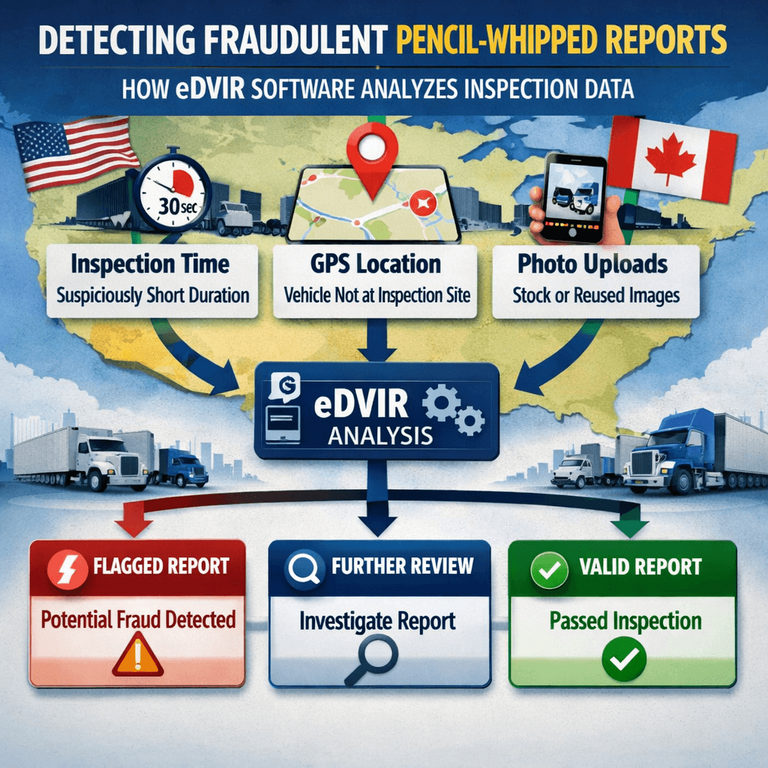
The administrative burden is heavy, but the operational danger of paper is where the true financial hemorrhage occurs. Paper forms offer zero accountability. They cannot verify physical reality. This leads directly to the epidemic of "pencil whipping"—the act of a driver rapidly checking off boxes and signing a DVIR without actually walking around the truck to perform the physical inspection.
Drivers pencil whip because they are in a rush, paid by the mile, or simply complacent. A paper form allows a driver to complete a mandatory 15-minute inspection in 15 seconds while sitting warmly in the cab. From a paperwork perspective, it looks compliant. From a mechanical perspective, it is a ticking time bomb.
Consider the financial difference between proactive preventative maintenance and reactive catastrophic breakdown:
- Scenario A (The True Inspection): Using an electronic DVIR app that forces the driver to take a live photo of the tires, the driver actually notices a nail embedded in the inside dual drive tire. The defect is logged, instantly alerting the shop. The terminal mechanic plugs the tire in 20 minutes for a total labor cost of $45. The truck dispatches slightly late, but safely.
- Scenario B (The Pencil Whip): The driver draws a straight line down the paper DVIR checkbox column, ignoring the tires. Three hours later, doing 70 MPH on a hot interstate, the compromised tire suffers a catastrophic blowout. The tire shreds, destroying the mudflap and damaging the trailer's air lines. The driver must pull over. The fleet now pays for an emergency roadside service call ($250), a premium replacement tire on the highway ($600), mobile mechanic labor for the air lines ($300), and suffers 5 hours of lost driver productivity and potentially a late delivery penalty on the freight. Total cost: $1,150+.
A single instance of pencil whipping that results in a roadside breakdown costs the equivalent of a multi-year subscription to a premium eDVIR platform. When you extrapolate that risk across a fleet of dozens or hundreds of trucks over a year, the "cheap" paper system is actually bleeding the maintenance budget dry.
DOT Audits and Fines: The 2026 Compliance Reality
The Federal Motor Carrier Safety Administration has modernized its auditing capabilities. In 2026, DOT investigators do not just look at paper; they cross-reference paper against unalterable digital data sources like Electronic Logging Devices (ELDs), GPS telematics, and toll booth transponders.
If a DOT auditor selects your fleet for a compliance review, paper DVIRs are an absolute liability. Auditors specifically look for:
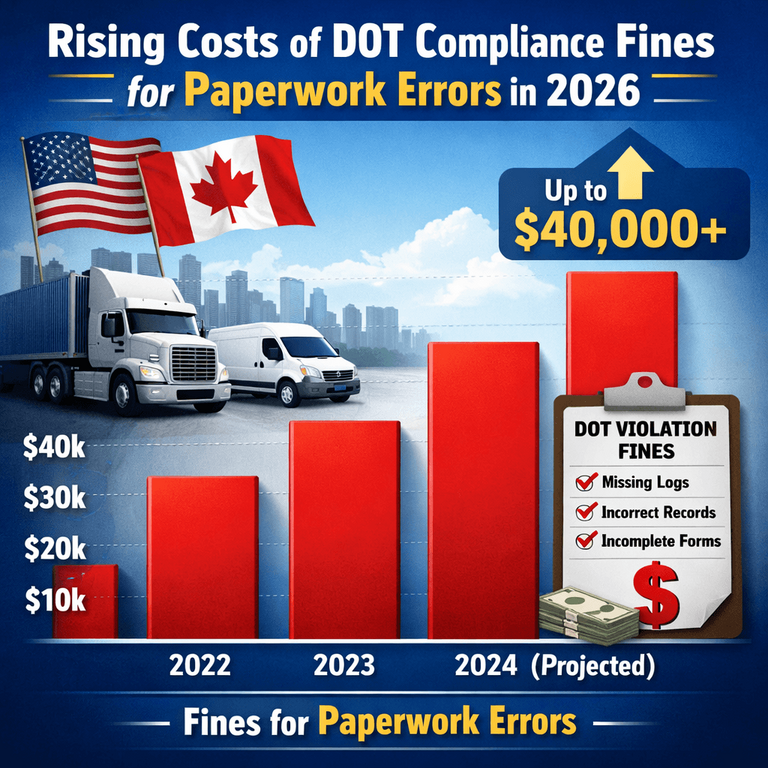
- Missing Signatures: Under the FMCSA 396.11 driver signature rule, if a defect was noted on Monday, Tuesday's log must contain the mechanic's signature verifying the repair, and the driver's signature acknowledging it. If just one of those signatures is missing on a piece of paper, it is a violation. At $1,000+ per occurrence, a disorganized filing cabinet can result in tens of thousands of dollars in fines.
- Time Impossibilities (False Logs): Auditors will check the timestamp on the paper DVIR against the ELD movement data. If a driver wrote down that they performed a pre-trip inspection at 8:00 AM, but the ELD shows the truck was moving at 65 MPH at 8:02 AM, the auditor has concrete proof that the driver falsified a federal document. Falsification of records carries maximum severity weights in the CSA methodology.
- Form and Manner Errors: Illegible handwriting, missing dates, missing truck unit numbers, or using the wrong carrier name on a standardized form all result in minor but cumulative compliance fines.
Nuclear Verdicts: The Insurance Nightmare & A 2026 Case Study
While DOT fines hurt, the ultimate hidden cost of paper logs is realized in the courtroom. We are currently operating in the era of the "Nuclear Verdict"—jury awards against trucking companies that regularly exceed $10 million. Plaintiff attorneys utilize a strategy known as the "Reptile Theory," attempting to prove to a jury that the motor carrier prioritized profits over public safety by actively ignoring maintenance issues.
In 2026, the commercial trucking insurance market is harder than ever. According to the American Transportation Research Institute (ATRI), nuclear verdicts now represent one of the top three concerns for motor carriers nationwide, with average jury awards climbing year over year. Underwriters are desperately seeking ways to mitigate risk. Many top-tier insurance providers now offer significant premium discounts to fleets that can prove they utilize robust electronic inspection systems. Conversely, paper DVIRs are highly vulnerable to legal attack. If a carrier cannot produce a paper DVIR for a specific date leading up to a crash, the attorney will argue "spoliation of evidence." They will claim the company intentionally destroyed the document to hide a defect.
2026 Mock Case Study: Defeating the Reptile Theory
Consider a fictional mid-sized carrier, "Apex Freight Solutions." One of Apex's trucks is involved in a severe collision on Interstate 80 when a passenger vehicle cuts them off. The truck's brakes functioned correctly, but the impact was unavoidable. The plaintiff's attorney attempts to sue Apex for $15 million, claiming negligent maintenance of the truck's braking system.
If Apex used paper logs, the attorney would subpoena the messy, pencil-whipped forms, pointing out missing signatures and claiming the driver never actually checked the brakes.
However, Apex uses an advanced electronic dvir system. During discovery, Apex provides an immutable, cryptographically secure digital log. The log proves via GPS geofencing that the driver was physically standing next to the axles two hours prior to the crash. It includes a time-stamped, live photo of the brake pushrods showing them in perfect condition, and logs that the driver spent exactly 18 minutes on the pre-trip. Faced with undeniable, digital proof of a flawless safety culture, the plaintiff's attorney realizes they cannot prove negligence. The case settles for a fraction of the cost, completely avoiding a nuclear verdict. The eDVIR software saved the company from bankruptcy.
How to Calculate Your Fleet's True DVIR Costs
Before committing to any software purchase, you need hard numbers. Use this four-step framework to uncover the true annual cost your fleet is paying for paper-based inspections. This process works for fleets of any size, from a 10-truck owner-operator to a 500-truck enterprise.
- Step 1: Calculate Direct Material Costs Multiply the cost of one paper DVIR booklet by the number of booklets a driver uses per year (usually 12–15). Multiply this by your total truck count. Add annual shipping and physical storage fees. This gives you your baseline material expenditure.
- Step 2: Calculate Administrative Labor Track how many minutes your safety or dispatch team spends daily collecting, deciphering, reviewing, and filing paper logs. Multiply these hours by the staff's hourly wage, then annualize it. This is typically the single largest hidden cost.
- Step 3: Analyze DOT Compliance Fines Review your previous year's FMCSA compliance audit and roadside inspection data. Sum the total fines paid for form & manner errors, missing signatures, or missing DVIR logs.
- Step 4: Estimate Preventable Breakdown Costs Calculate the annual cost of emergency roadside repairs—towing, mobile mechanic fees, lost freight time—that could have been prevented if a defect was properly reported during a pre-trip inspection.
Add the four totals together and you have your True Annual Paper DVIR Cost. Compare it to the subscription fee of a modern eDVIR platform, and the ROI becomes immediately clear. The calculator scenarios below do exactly this for three fleet sizes.
Electronic DVIR Apps: Breaking Down the ROI
Transitioning from paper to a modern pre-trip inspection software platform is not a "cost center" upgrade; it is a massive revenue protection strategy. The Return on Investment (ROI) is generated by eliminating the inefficiencies of paper.
When you deploy a digital solution like PTI4YOU across your fleet, the financial dynamics change immediately:
- Zero Physical Costs: You instantly eliminate the monthly recurring costs of purchasing carbon-copy booklets, shipping them across the country, and paying for physical office space to store them.
- 100% Administrative Reallocation: The safety manager who previously spent 4 hours a day deciphering handwriting and hole-punching paper is now freed up to actually manage safety. Defects are routed instantly to the mechanic's digital dashboard. Clean inspections are automatically archived in the cloud. Data entry drops to zero seconds per day.
- Eradication of Pencil Whipping: Modern eDVIR apps utilize mandatory photo captures, GPS geofencing (ensuring the driver is standing next to the truck), and minimum time-on-task requirements. Drivers must perform the inspection. This catches minor defects early, plummeting your emergency roadside breakdown expenses.
- Bulletproof DOT Compliance: The software physically will not allow a driver to dispatch a truck with an open, un-signed defect. The three-signature cycle is automated. Form and manner errors disappear because the software autofills dates, times, and unit numbers. DOT fines for paperwork drop to near zero.
The 10-Truck Owner-Operator Cost Calculator
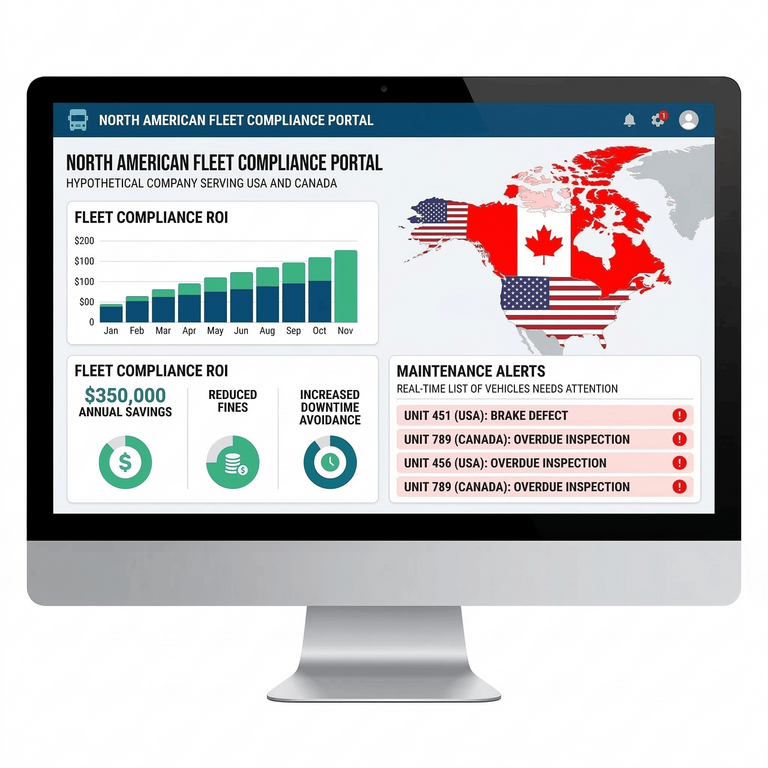
Many small fleets believe they are too small for software. This is a fallacy. For a 10-truck operation, the owner is often the dispatcher, the safety manager, and sometimes the lead mechanic. Time is their most valuable asset.
10-Truck Fleet: Paper Costs
- Physical Supplies: 10 trucks x 12 books/year x $4.00 = $480
- Shipping: $100
- Admin Labor (Owner's Time): 30 mins/day x 260 days = 130 hours/year. If the owner's time is worth $50/hour, that is $6,500 of lost high-value time.
- Preventable Breakdowns: 2 minor breakdowns x $800 = $1,600
Total Annual Paper Cost: $8,680
10-Truck Fleet: eDVIR Software
- Software Subscription: 10 trucks x $10/month x 12 months = $1,200
- Admin Labor: Reduced to 15 hours/year monitoring dashboard x $50 = $750
Total Annual eDVIR Cost: $1,950
Small Fleet ROI: The small fleet saves over $6,700 annually, freeing up the owner to find better freight instead of pushing paper.
The 50-Truck Regional Fleet Cost Calculator
For mid-sized regional fleets, the administrative burden begins to require dedicated staff, making the inefficiency of paper even more pronounced.
50-Truck Fleet: Paper Costs
- Physical Supplies: 50 trucks x 12 paper books/year x $4.00/book = $2,400
- Shipping & Logistics: Estimated $500
- Administrative Labor: 3 minutes to process 1 log x 50 trucks = 150 mins/day. 150 mins x 260 working days = 650 hours/year. 650 hours x $22/hour admin rate = $14,300
- Preventable Roadside Breakdowns: 5 breakdowns x $1,000 average cost = $5,000
- DOT Paperwork Fines: 3 missing signature violations x $800 = $2,400
Total Annual Paper Cost: $24,600 (Effectively $492 per truck, per year).
50-Truck Fleet: eDVIR Software
- Software Subscription: 50 trucks x $10 x 12 months = $6,000
- Administrative Labor: Software routes exceptions automatically. 65 hours/year x $22/hour = $1,430
- Preventable Roadside Breakdowns: 1 unavoidable breakdown x $1,000 = $1,000
- DOT Paperwork Fines: Eliminated due to software guardrails = $0
Total Annual eDVIR Cost: $8,430
Mid-Sized Fleet ROI: The fleet saves over $16,000, paying for the software almost three times over in the first year.
Tired of Calculating Paper Costs Manually?
Let PTI4YOU automate your compliance and eliminate the hidden costs destroying your margins. See real savings for your fleet size in minutes — no spreadsheets required.
Start Your 15-Day Free Trial – No Credit Card RequiredZero setup fees. Zero hardware. 25-minute driver onboarding.
The 250-Truck Enterprise Fleet Cost Calculator
At the enterprise scale, paper becomes a massive corporate liability. Storage costs soar, and the sheer volume of data makes it impossible to track safety trends manually. The threat of a nuclear verdict is exponentially higher.
250-Truck Fleet: Paper Costs
- Physical Supplies: 250 trucks x 12 books x $3.50 (bulk rate) = $10,500
- Off-site Document Storage (e.g., Iron Mountain): $4,500
- Administrative Labor: Requires multiple full-time clerks just for compliance data entry. Approx. 3,250 hours/year x $22/hour = $71,500
- Preventable Breakdowns & Tows: 25 breakdowns x $1,200 average = $30,000
- DOT Compliance Fines (Higher audit frequency): 10 violations x $1,000 = $10,000
Total Annual Paper Cost: $126,500
250-Truck Fleet: eDVIR Software
- Software Subscription: 250 trucks x $8/month (enterprise volume rate) x 12 months = $24,000
- Administrative Labor: Exception management only. 300 hours/year x $25/hour (higher level analyst) = $7,500
- Preventable Breakdowns: Reduced by 80%. 5 unavoidable breakdowns x $1,200 = $6,000
- Insurance Premium Discount: Many carriers see a 2-5% premium reduction for verifiable digital safety programs. Let's conservatively estimate a savings of -$15,000.
Total Annual eDVIR Cost: $22,500 (Net of insurance savings)
Enterprise Fleet ROI: The enterprise fleet saves over $100,000 annually by digitizing their inspection process, transforming a massive liability into a highly controlled, auditable data stream.
The 2026 Digital Freight Ecosystem: AI, Big Data, and AGVs
Sticking to paper logs doesn't just cost you money today; it isolates your fleet from the massive technological advancements happening in the logistics sector right now. As the Verizon Connect Fleet Technology Trends Report documents, digital DVIR platforms are evolving far beyond simple compliance checklists; they are becoming the foundational data sets for the entire supply chain.
Artificial Intelligence & Predictive Maintenance
When you digitize your inspection data, AI algorithms can analyze historical trends across your entire fleet. For example, if drivers consistently report minor air pressure drops on a specific brand of trailer tire just before a major blowout occurs, the AI can flag those pressure drops across all trailers and recommend early replacement. A paper form sitting in a drawer cannot be analyzed by an algorithm. Furthermore, leading eDVIR platforms in 2026 are integrating advanced computer vision. A driver takes a photo of a tire, and the software instantly estimates the tread depth, alerting management if it falls below the DOT minimum.
Big Data and OEM Negotiations
Enterprise fleets are harnessing Big Data generated by electronic DVIRs to negotiate smarter truck purchases. If your digital logs prove that a certain OEM's alternators fail 30% faster than the industry average, your procurement team has hard data to leverage during contract negotiations. Paper logs trap this invaluable business intelligence in a filing cabinet.
Integration with Automated Guided Vehicles (AGVs)
The 2026 terminal yard is becoming increasingly automated. Automated Guided Vehicles (AGVs)—robotic yard hostlers—are taking over trailer spotting duties. These highly advanced AGVs rely completely on API integrations with fleet software. If an electronic DVIR tags a trailer with a severe brake defect, the eDVIR software communicates directly with the AGV control system. The AGV will physically refuse to hook up to that unsafe trailer, preventing a catastrophic yard accident. If that defect was written on a piece of paper in the dispatch office, the robot has no way of knowing the trailer is dangerous. To participate in the automated freight future, your data must be digital.
Overcoming the Transition Cost: Change Management
While the math heavily favors digitization, fleet managers must acknowledge the "transition cost"—the friction and pushback associated with moving veteran drivers from a system they have used for 20 years to a smartphone app.
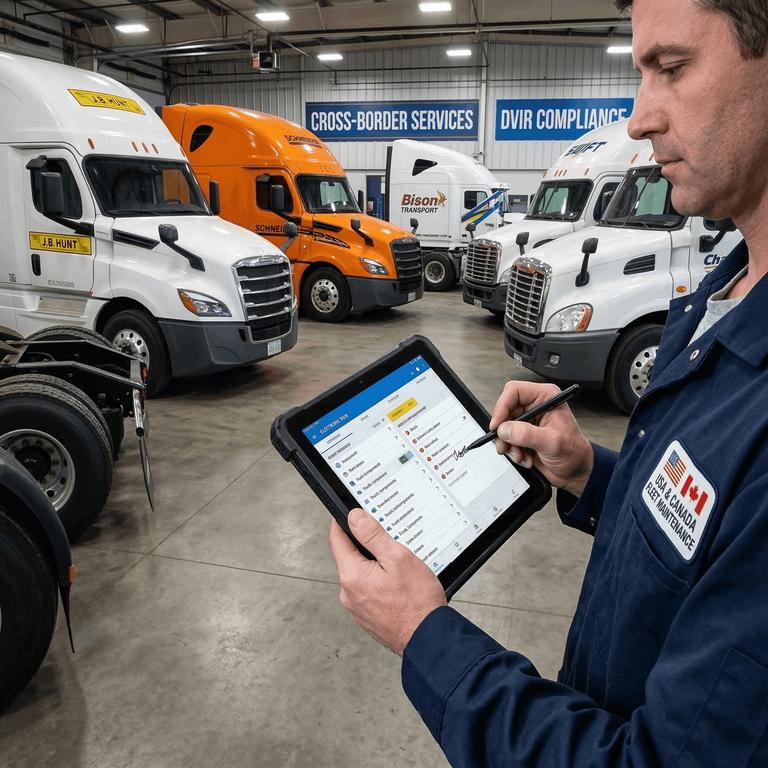
Change management is critical to realizing the ROI of an eDVIR platform. As we explored in our guide on why drivers must perform pre-trip inspections, if drivers refuse to use the app correctly, or if mechanics ignore the digital alerts, the software becomes useless. To minimize transition friction, fleets should adopt a phased approach:
- Select an Intuitive UI: Do not buy clunky software built for desktop computers and squeezed onto a mobile screen. Choose an app built native for iOS and Android with large buttons, clear text, and simple offline capabilities. If a driver cannot figure it out in 5 minutes, they won't use it.
- The Pilot Program: Roll the software out to your top 10% of drivers first—the respected veterans who are open to new tools. Let them use it for two weeks. When they report back to the driver lounge that the app is actually faster than paper and saves them a trip to the dispatch office, adoption will skyrocket.
- Highlight Driver Benefits: Frame the transition around protecting the driver, not spying on them. Explain that the digital timestamps and photos protect their CDL during a roadside inspection. It provides undeniable proof that they did their job correctly before leaving the terminal.
Frequently Asked Questions (FAQ)
Are paper DVIRs still legal in 2026?
Yes, the FMCSA technically still allows paper Driver Vehicle Inspection Reports (DVIRs) under 49 CFR § 396.11. However, relying on paper vastly increases your risk of compliance violations due to missing signatures, lost records, and illegible handwriting. While legal, they are an immense operational liability that many top-tier freight brokers are starting to frown upon.
What is the true cost of paper DVIR books per truck?
While a single booklet might only cost $3 to $5, the true cost includes shipping, physical storage, administrative review time, and data entry. When calculating these hidden operational costs, paper logs can cost a fleet upwards of $500 to $600 per truck, per year in wasted labor and material.
How does an electronic DVIR save money on fleet maintenance?
Electronic DVIR (eDVIR) apps mandate compliance with time-tracking and required photo uploads, physically preventing "pencil whipping." By catching minor defects (like a small air leak) in the terminal yard before they become catastrophic on-road failures (like a blown brake chamber), fleets save thousands on emergency towing and roadside repairs.
What is the ROI of switching from paper to electronic inspections?
Most fleets experience a full Return on Investment (ROI) within 3 to 6 months of implementing an eDVIR system. The ROI is generated through eliminated paper supply costs, drastically reduced administrative labor (no more manual data entry), lower CSA violation fines, and reduced preventative maintenance costs.
How long do I need to store paper DVIRs legally?
According to the FMCSA, motor carriers must retain the original DVIR and certification of repairs for a minimum of 90 days (three months) from the date of the report. However, in the event of an accident or a lawsuit, legal holds may require you to retain them indefinitely, causing massive physical storage issues that digital clouds solve instantly.
Conclusion: Stop Burning Money on Outdated Processes
The math is clear and undeniable. The belief that paper logs are a cheap way to manage fleet compliance is a relic of a bygone era. In 2026, the administrative burden, the threat of multi-million dollar nuclear verdicts, the skyrocketing costs of roadside breakdowns, and the strict auditing practices of the FMCSA make paper forms an unacceptable financial liability.
An electronic DVIR system is no longer a luxury for enterprise carriers; it is a fundamental requirement for any fleet looking to protect its profit margins, leverage modern AI technology, and ensure true, verifiable safety on the road. By investing in digital compliance, you are not just buying software—you are buying operational efficiency, legal protection, and peace of mind.
Ditch the Paper. Maximize Your ROI Today.
Stop paying your staff to push paper and start proactively protecting your fleet. PTI4YOU's intelligent eDVIR platform automates compliance, routes defects instantly, and guarantees verifiable inspections with GPS and photo capture. Calculate your savings instantly.
Start your 15-day free trial today. No credit card required.
Start Your 15-Day Free Trial – No Credit Card RequiredZero setup fees. Zero hardware. 25-minute driver onboarding.