
The 2026 Fleet Management Software Landscape
In 2026, managing a small commercial fleet in the United States or Canada requires sophisticated technological tools. The days of relying on paper logbooks, manual maintenance whiteboards, and fragmented communication between drivers and mechanics are over. The Federal Motor Carrier Safety Administration (FMCSA) and Canadian transport authorities have drastically tightened compliance standards. Choosing the right fleet management software—specifically regarding electronic Driver Vehicle Inspection Reports (eDVIRs) and hours-of-service (HOS) tracking—is no longer a luxury; it is a critical requirement for maintaining your operating authority.
As new 2026 FMCSA rules come into full effect, targeting aggressive data scoring and driver-observed defects, software vendors are battling for your subscription dollars. When you search for solutions, three massive names dominate the advertising space: Samsara, Motive (formerly KeepTruckin), and Whip Around.
These platforms are incredibly powerful, boasting features from AI dashcams to advanced predictive maintenance. However, for a small fleet operator (typically 5 to 50 power units), the question isn't just about what a software can do. The real questions are: What does it actually cost? How hard is it to implement? And does my small fleet actually need all these features to stay DOT compliant?
This comprehensive, unbiased guide will break down the true pros, cons, pricing structures, and use-cases of Whip Around, Motive, and Samsara. Furthermore, we will introduce a leaner, highly specialized alternative—PTI4YOU—designed specifically for small operators who want to eradicate paperwork and secure their DOT compliance without bankrupting their operational budget.
Why Small Fleets Struggle with Enterprise Telematics
Before diving into individual reviews, it is essential to understand the fundamental mismatch that often occurs when small fleets adopt enterprise-grade telematics solutions. Fleet managers operating a dozen trucks have vastly different daily pain points than logistics executives managing 5,000 assets.
A small motor carrier's primary goal is survival and efficiency. They need to ensure their drivers are legally dispatched, their trucks pass roadside inspections, and their mechanics are immediately notified of defects. They want to avoid the devastating hidden costs of pencil whipping—the practice where drivers blindly sign off on paper inspections without actually checking the vehicle.
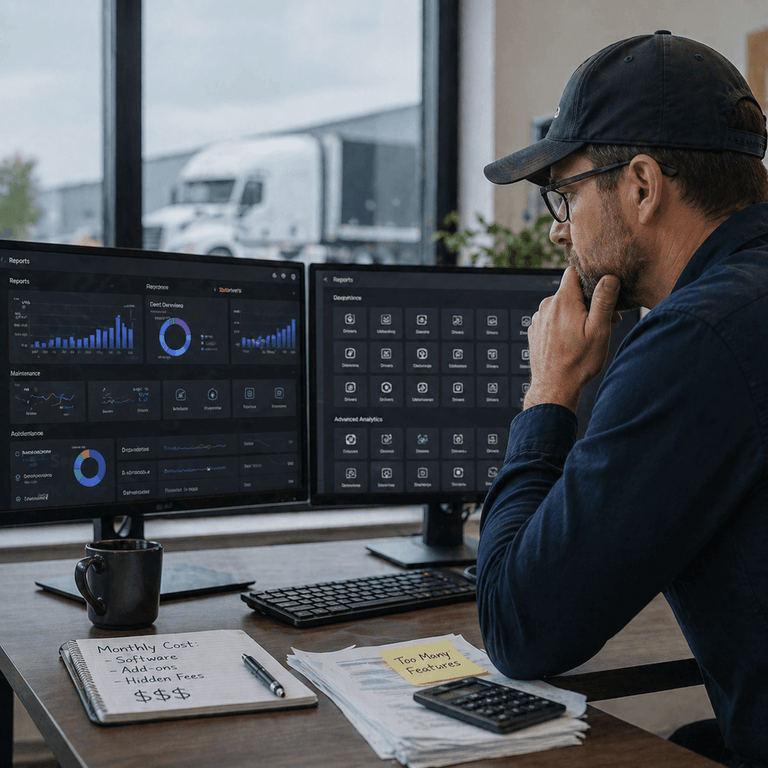
When these small fleets purchase massive enterprise systems like Samsara or Motive, they often experience "feature bloat." They are paying premium monthly subscriptions for features like advanced fuel tax reporting, AI driver coaching, and temperature probe monitoring, but their actual daily usage is limited to basic HOS logging and simple DVIR submissions.
Furthermore, enterprise platforms almost always require proprietary hardware. You must purchase their specific plug-in devices, their specific dashcams, and sometimes even their specific tablets. For a small fleet, this upfront capital expenditure—often bound by harsh multi-year contracts—can cripple cash flow. This is why specialized, software-only solutions (like Whip Around and PTI4YOU) have surged in popularity in 2026.
Whip Around: The Inspection Specialist
Unlike Samsara or Motive, Whip Around did not start as an Electronic Logging Device (ELD) or GPS tracking company. Whip Around was born entirely out of the need to digitize the daily vehicle inspection process. It is a highly focused software platform that aims to connect drivers, fleet managers, and mechanics into a single, cohesive maintenance workflow.
Key Features
- Customizable Forms: Whip Around allows managers to build highly specific inspection forms for any asset, from semi-trucks to forklifts.
- Photo and Signature Capture: Drivers can upload photos of defects directly from their smartphones, ensuring visual proof of vehicle condition.
- Work Order Management: When a driver logs a defect, the system automatically generates a work order for the mechanic portal.
- Integration Ecosystem: Because Whip Around doesn't manufacture ELDs, it offers robust APIs to integrate with existing GPS/ELD providers (including Motive and Geotab).
Pros for Small Fleets
Whip Around is incredibly user-friendly. For a fleet manager who simply wants to ditch paper DVIRs, the learning curve is minimal. The Bring Your Own Device (BYOD) model means drivers use their own smartphones, eliminating hardware costs. Their focus on the maintenance cycle genuinely helps fleets catch defects early, reducing expensive roadside Out-Of-Service (OOS) violations.
Limitations and Cons
Whip Around's greatest strength is also its primary limitation: it is not an all-in-one platform. If your fleet requires an FMCSA-mandated ELD to track hours of service, you still have to buy a separate system from a different vendor. While integrations exist, running two distinct software ecosystems—and paying two separate subscriptions—can be cumbersome for a small back-office team. Additionally, in 2026, their pricing tiers have crept upward, pushing advanced features like inventory management into costly premium tiers.
Motive (KeepTruckin): The ELD Giant
Originally known as KeepTruckin, Motive rose to dominance by offering one of the most accessible and popular ELDs during the original FMCSA mandate rollout. Today, Motive has evolved into a massive, comprehensive AI fleet management platform. It offers everything from basic HOS logging to AI-powered dashcams, corporate spend management cards, and advanced asset tracking.
Key Features
- Industry-Leading ELD: Motive's core ELD functionality remains arguably the most intuitive in the industry, highly praised by drivers for its ease of use.
- AI Dashcams: Deep integration with intelligent video telematics that auto-detects harsh braking, cell phone usage, and unbuckled seatbelts.
- Automated IFTA: Seamlessly calculates International Fuel Tax Agreement reporting.
- Integrated DVIR: Offers an electronic DVIR module tied directly to the driver's HOS log.
Pros for Small Fleets
If a small fleet wants exactly one vendor for hardware, software, ELDs, and cameras, Motive is a highly compelling choice. Their driver app is notoriously easy to learn, which minimizes onboarding friction. The customer support infrastructure is robust, and the hardware is generally reliable. Their DVIR system is adequate for standard DOT compliance, linking inspections tightly to the driver's duty status.
Limitations and Cons
Motive has fully transitioned into an enterprise data company. For a small fleet, the pricing can be aggressive, typically requiring long-term hardware contracts (often 3 to 5 years). The DVIR module, while functional, is often viewed as a secondary feature compared to their ELD and camera tech. It lacks the deep, customizable mechanic workflow nuances found in dedicated inspection apps like Whip Around or PTI4YOU. You are paying a premium for a massive ecosystem; if you only use 20% of the features, the ROI diminishes rapidly.
Samsara: The Enterprise IoT Behemoth
Samsara is the undisputed heavyweight champion of industrial IoT (Internet of Things). They do not just track trucks; they track construction equipment, municipal buses, and factory machinery. Samsara offers a truly unified, cloud-based operational platform that connects virtually every physical asset a company owns.
Key Features
- Real-Time GPS and Diagnostics: Hyper-accurate routing and deep engine diagnostic data pulls.
- Environmental Sensors: Advanced temperature and humidity tracking for reefer fleets.
- Safety Workflows: Gamified driver safety scores, incident review portals, and comprehensive compliance dashboards.
- Customizable DVIRs: A very robust electronic inspection module integrated into the broader maintenance platform.
Pros for Small Fleets
Using Samsara is like driving a luxury vehicle. The interface is gorgeous, the data reporting is unparalleled, and the hardware is top-tier. If a small fleet is scaling rapidly (e.g., aiming to grow from 20 to 100 trucks in two years) and has complex needs like refrigerated transport or mixed-asset construction yards, Samsara provides a future-proof foundation.
Limitations and Cons
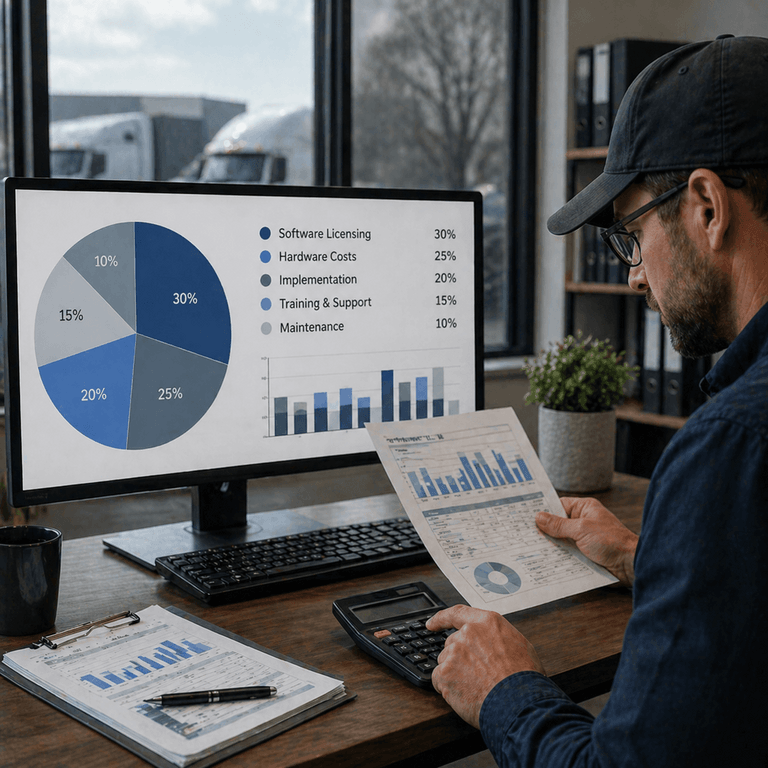
Samsara is expensive. It is explicitly designed and priced for enterprise budgets. The implementation process can be overwhelming for a small business without a dedicated IT or safety director. The hardware contracts are rigid, and the per-asset licensing fees accumulate quickly. For a 10-truck fleet moving dry van freight locally, Samsara is massive overkill. Paying for enterprise IoT architecture when you simply need to avoid common DVIR violations is not a sound financial strategy.
Head-to-Head Comparison Matrix
To simplify the decision-making process, here is a breakdown of how these platforms align with the core needs of small fleets in 2026:
| Feature / Category | Whip Around | Motive | Samsara |
|---|---|---|---|
| Primary Focus | DVIR & Maintenance | ELD & AI Dashcams | Enterprise IoT & Telematics |
| Hardware Required? | No (BYOD Software) | Yes (Proprietary) | Yes (Proprietary) |
| FMCSA ELD Included? | No (Integrates via API) | Yes (Core Feature) | Yes (Core Feature) |
| DVIR Depth | Excellent / Highly Customizable | Good / Standard Compliance | Excellent / Enterprise Grade |
| Pricing Model | Per Vehicle / Tiered SaaS | Contract / Hardware + SaaS | Contract / High Premium |
| Best For... | Fleets wanting to digitize maintenance without changing ELDs. | Fleets wanting an all-in-one ELD/Camera suite. | Large, complex fleets scaling rapidly. |
The Hidden Costs of Complex Fleet Software
When evaluating these alternatives, small fleet managers must look beyond the initial monthly quote. Calculating the true cost of paper vs. electronic DVIR requires acknowledging hidden enterprise software fees:
1. Hardware Lock-in: When you sign a contract with Motive or Samsara, you are committing to their physical hardware. If a cellular gateway breaks out of warranty, or if you need to upgrade to new dashcams, you are purchasing proprietary equipment at their prices. You cannot simply download an app on a cheap Android tablet and go to work.
2. Long-Term Contracts: Small businesses need agility. If a fleet loses a major contract and needs to downsize from 15 to 8 trucks, enterprise software vendors rarely allow you to break your 36-month license agreements. You will continue paying for "ghost" assets.
3. Implementation Downtime: Installing hardwired telematics devices requires pulling trucks out of revenue-generating service. Mechanics must route cables, install gateway modules, and mount cameras. For a small fleet, a week of installation downtime across all assets represents a massive hit to the bottom line.
PTI4YOU: The Purpose-Built Alternative for Small Fleets
If Whip Around is too specialized, Motive is too rigid, and Samsara is too expensive, where does a 15-truck fleet turn for reliable, modern DOT compliance? This is exactly where PTI4YOU enters the market.
PTI4YOU was engineered from the ground up to solve the exact pain points of small to medium-sized motor carriers operating in the USA and Canada. We recognized that small fleets don't want to pay for AI fuel analysis—they want a foolproof way to stop drivers from pencil whipping inspections, and they want mechanics to sign off on repairs digitally without fighting complex software interfaces.
Why Small Fleets Choose PTI4YOU
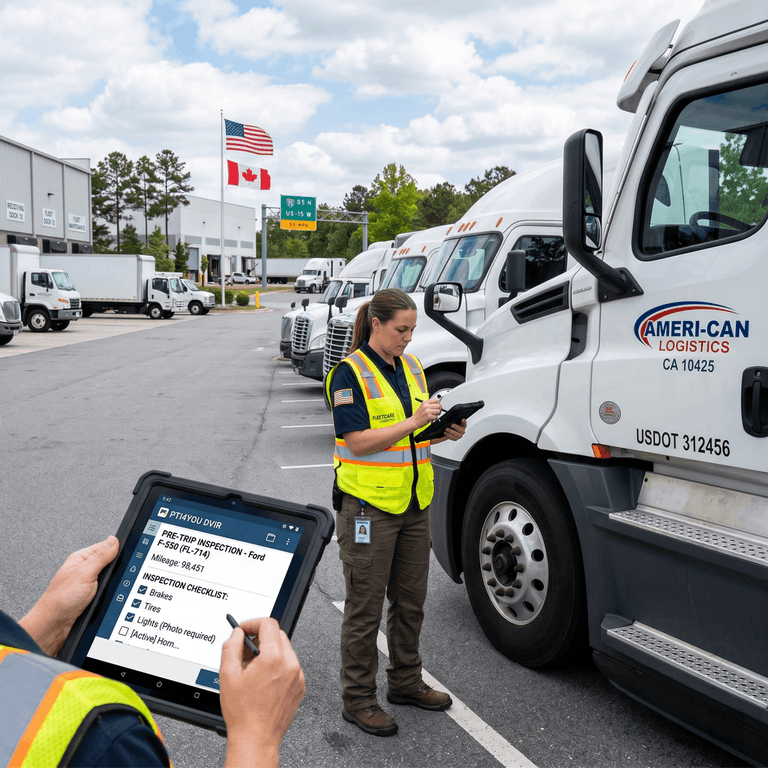
- Zero Hardware Requirements: PTI4YOU is a pure SaaS (Software as a Service) solution. Drivers use the intuitive app on their existing iOS or Android smartphones. There are no gateways to wire, no proprietary tablets to buy, and zero installation downtime.
- Eradicating Pencil Whipping: PTI4YOU mathematically forces compliance. You can configure the system to mandate timestamped, GPS-verified photo uploads of critical components (like steer tires and glad hands) before a driver can submit their pre-trip.
- Mastering the 3-Signature Cycle: We built the platform specifically to master the FMCSA 396.11 driver signature rule. When a defect is logged, the mechanic signs off digitally, and the next driver is forced to review and sign the repair acknowledgment. It creates an unbreakable, DOT-proof audit trail.
- Cross-Border Native: PTI4YOU seamlessly handles both US FMCSA eDVIR regulations and Canadian NSC Standard 13 compliance, making it the perfect tool for cross-border logistics.
- Transparent, Affordable Pricing: No massive upfront capital expenditures. No predatory 3-year lock-ins. You pay a simple, scalable monthly fee based strictly on the features you actually need to survive a DOT audit.
5-Step Guide to Choosing Your Software
Transitioning your small fleet to a new software ecosystem is a critical business decision. Follow this 5-step action plan to ensure you select the right tool for 2026:
-
Step 1: Audit Your Current Telematics Needs
Determine exactly what you must have versus what is "nice to have." If you already have a basic, cheap ELD that tracks HOS perfectly, do not rip it out just to get a better DVIR. Look for a standalone DVIR software like PTI4YOU.
-
Step 2: Calculate Hardware Exposure
Request quotes from Motive and Samsara, but demand the full 36-month hardware breakdown. Calculate the true cost of hardwiring your entire fleet versus utilizing a BYOD (Bring Your Own Device) software model.
-
Step 3: Analyze Your Compliance Weaknesses
Look at your recent roadside violations. Are you failing because of HOS errors, or are you failing because of basic maintenance defects (lights, tires)? If maintenance is the issue, prioritize software with forced-photo inspection workflows.
-
Step 4: Test Mechanic Usability
A DVIR system is useless if your shop mechanics refuse to use it. Choose software with the cleanest, simplest mechanic dashboard. The goal is to close repair loops rapidly, not to turn mechanics into IT professionals.
-
Step 5: Run a Free Trial
Never commit to a multi-year contract without testing the software on the yard. Deploy the app to your two most technologically challenged drivers. If they can complete a perfect digital pre-trip without calling dispatch for help, you have found your software.
Frequently Asked Questions (FAQ)
Is Samsara or Motive better for a fleet with under 10 trucks?
For fleets under 10 trucks, both Samsara and Motive can be expensive and feature-heavy. Motive is generally easier to adopt for smaller operations due to its user-friendly ELD origins, whereas Samsara focuses heavily on enterprise IoT deployments. However, many small fleets find lighter solutions like Whip Around or PTI4YOU much more cost-effective and practical.
Does Whip Around include ELD and GPS tracking?
Whip Around is primarily a maintenance and inspection (DVIR) software. While it integrates with major ELD and GPS providers via API, it does not manufacture its own ELD hardware. If you need an all-in-one hardware and software suite, Motive or Samsara would be the traditional choice.
Why are electronic DVIRs critical in 2026?
The FMCSA has introduced strict new data-scoring metrics targeting driver-observed defects. Electronic DVIRs prevent 'pencil whipping' by forcing drivers to upload timestamped photos of vehicle components, ensuring actual physical walk-arounds occur. This protects the fleet's overall CSA score from easily preventable roadside violations.
Can Canadian fleets use these software platforms?
Yes. Motive, Samsara, Whip Around, and PTI4YOU all support Canadian NSC Standard 13 compliance as well as cross-border US FMCSA regulations. PTI4YOU is particularly optimized for dual-compliance without forcing Canadian fleets into unnecessary US-centric hardware lock-in.
Conclusion: Protecting Your Fleet in 2026
Navigating the fleet management software market in 2026 does not require a massive enterprise budget; it requires strategic clarity. Samsara and Motive are phenomenal platforms for massive logistics conglomerates that need total IoT visibility. Whip Around is a strong tool for digitizing maintenance but can become fragmented without native ELD hardware. For the vast majority of small fleet operators, the goal is simple: achieve rock-solid DOT compliance, stop drivers from pencil whipping inspections, and avoid predatory contracts.
You do not need to overpay to protect your operating authority. You simply need the right tool for the job.
Automate Your Fleet Compliance Today
Stop pencil whipping and protect your CSA percentiles with PTI4YOU. Our DOT-compliant electronic DVIR platform is designed specifically to help fleets in the USA and Canada maintain perfect digital records, automate mechanic sign-offs, and slash roadside maintenance violations.
Start your 15-day free trial today and bulletproof your maintenance records. No credit card required.
Start Your 15-Day Free Trial – No Credit Card RequiredZero setup fees. Zero hardware. 25-minute driver onboarding.