Key Takeaways for Compliance Managers
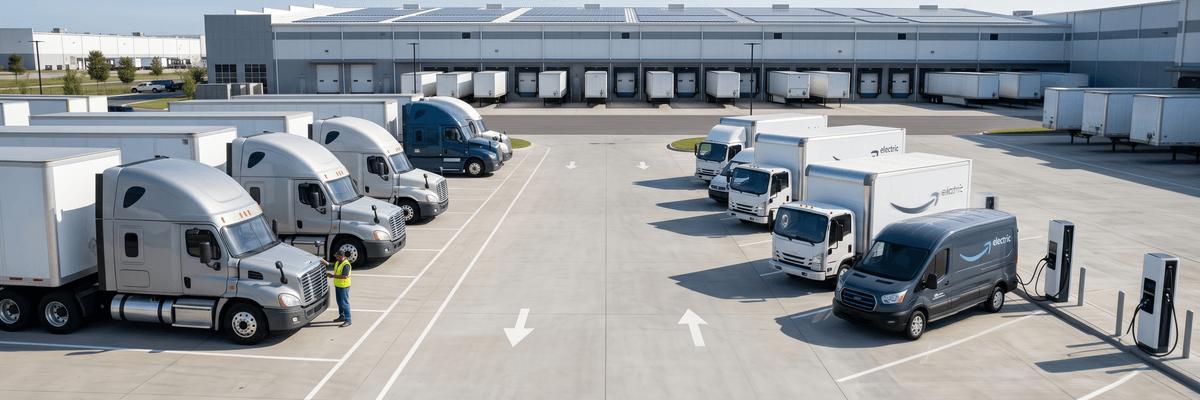
- The Hybrid Era is Now: More than 40% of North American mid-sized fleets operate a mix of ICE and electric commercial vehicles, causing localized compliance friction.
- Inspection Logic Differs Fundamentally: Traditional diesel walk-arounds focus heavily on emissions, oils, and physical mechanical wear; EV inspections demand focus on battery diagnostics, high-voltage cables, and regenerative braking safety.
- Paper Forms Invite Severe Risk: Running uniform paper checklists across disparate asset types leaves critical EV items uninspected or forces drivers to "pencil whip" non-existent diesel components on electric trucks.
- Dynamic Automation Isolates Liabilities: Cloud-based digital vehicle inspection reports automatically alter questions by propulsion type, building immutable, audit-ready histories.
1. Introduction: The Mixed Fleet Transition of 2026
The commercial transportation and logistics landscape across the United States and Canada is undergoing its most profound structural disruption since the invention of the assembly line. As we progress through 2026, corporate sustainability mandates, rigorous municipal zero-emission zones, and federal procurement incentives have accelerated the deployment of electric commercial vehicles (CMVs). However, the operational reality for the vast majority of motor carriers is not an instantaneous transformation; it is a prolonged, strategic phase of hybrid co-existence.
Fleet operators are not replacing their entire asset portfolios overnight. Instead, they are integrating medium- and heavy-duty electric trucks, yard tractors, and last-mile delivery vans into established operational footprints dominated by internal combustion engine (ICE) vehicles. This modern structural paradigm—the mixed fleet—brings an unprecedented layer of complexity to safety management, preventive maintenance, and regulatory compliance.
At the center of this operational friction sits the Driver Vehicle Inspection Report (DVIR). For decades, daily pre-trip and post-trip vehicle inspections have relied on standardized, static checklists engineered explicitly for diesel and gasoline powertrains. In 2026, these legacy, paper-based inspection models are failing catastrophically. An inspection routine designed to check for diesel exhaust leaks and oil pan gaskets is fundamentally useless when applied to an electric transit van or an e-axle freight tractor. Conversely, forcing a diesel driver to decipher high-voltage cooling systems without guided workflows creates operational delays and massive legal liability. To safeguard safety scores, pass intensive DOT audits, and minimize fleet downtime, operators are rapidly transitioning to an intelligent, multi-propulsion platform: digital DVIR for mixed fleets.
2. What Is a Mixed Fleet? Defining Modern Complexities
In the context of contemporary commercial transport, a mixed fleet is defined as an operational ecosystem that simultaneously deploys vehicles powered by radically distinct propulsion technologies. This primarily involves three major vehicle classifications working in tandem:
- Internal Combustion Engine (ICE) Vehicles: Traditional assets relying on conventional diesel, gasoline, or compressed natural gas (CNG) internal combustion configurations. These remain the workhorses for long-haul interstate corridors due to established infrastructure.
- Electric Commercial Vehicles (EVs): Battery electric vehicles (BEVs) utilizing high-capacity battery packs, advanced power inverters, high-voltage wiring, and electric drive motors (or e-axles) for propulsion. These are rapidly dominating regional haul, port drayage, and urban distribution hubs.
- Hybrid Fleet Operations: Systems incorporating plug-in hybrid electric vehicles (PHEVs) or fuel cell electric vehicles (FCEVs) alongside standard ICE and BEV units to maximize route flexibility while mitigating regional infrastructure gaps.
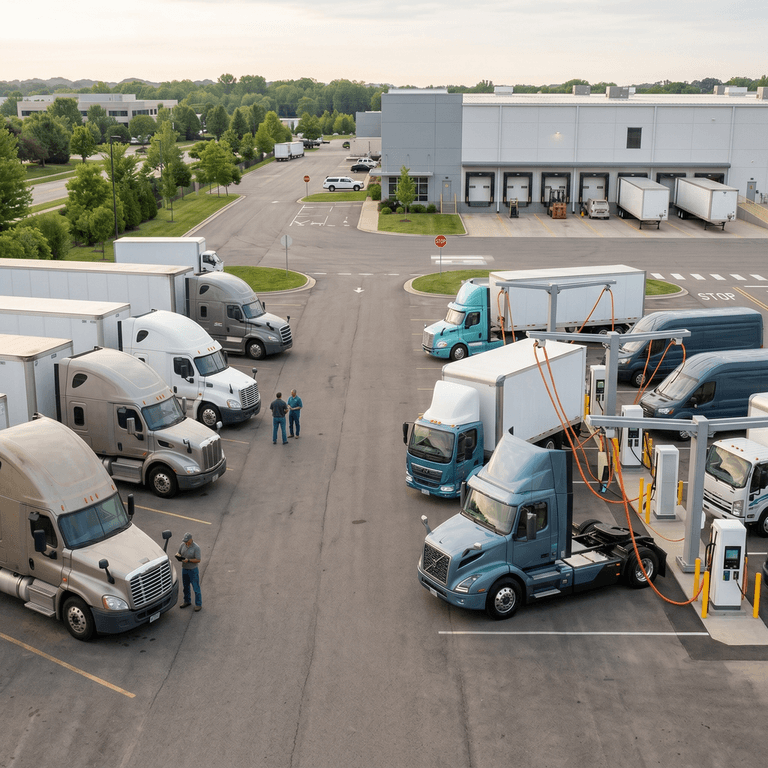
Mixed fleet management in 2026 requires balancing the distinct mechanical profiles of traditional diesel platforms and high-voltage electric trucks.
The operational complexity stemming from these blended ecosystems impacts every facet of organizational governance. Fleet managers are no longer managing single mechanical baselines. Instead, they must juggle two entirely separate supply chains for parts, two distinct maintenance frequencies, and drivers who must switch fluidly between different pre-trip safety checklists within a single shift. This dual-track reality places immense strain on back-office staff, who must maintain centralized oversight and ensure absolute compliance parity across vastly different mechanical profiles.
3. Why Traditional DVIR Processes Break Down in Mixed Fleets
The traditional, paper-based or un-customized electronic trip inspection process is completely incapable of supporting a mixed fleet. When a single, immutable checklist is distributed across an operation, compliance integrity decomposes rapidly due to several systemic pressure points:
The Trap of Generalization vs. The Reality of EV Mechanics
A generic paper DVIR form designed to satisfy FMCSA Part 396.11 or Canadian National Safety Code (NSC) Standard 13 naturally features items such as "Engine Compartment," "Belts and Hoses," "Exhaust System," and "Fuel Tanks." When a driver climbs into the cab of a Class 6 electric delivery vehicle, they are immediately confronted with an administrative mismatch. There is no exhaust system. There is no fuel tank. There are no conventional engine drive belts.
Faced with this structural irrelevance, drivers inevitably succumb to "pencil whipping"—blindly checking off boxes to clear the screen or paper sheet as fast as possible. Once a driver develops the muscle memory of checking off non-existent components on an EV, they apply that exact same reckless complacency to their diesel inspections, ignoring legitimate safety hazards like unadjusted brake pushrods or wheel hub leaks. This cross-contamination of inspection bad habits undermines the fleet's entire safety culture.
Data Fragmentation and Manual Reporting Delays
In traditional setups, when an EV driver identifies a localized high-voltage thermal anomaly or a defective charging port latch via paper forms, that document must be physically turned in at the end of the shift, sorted by an administrative clerk, and manually transcribed into a maintenance work order. In a mixed fleet, this lag time is deadly. While a minor oil leak on a diesel truck can occasionally be monitored across a regional shift, a compromised cooling loop or a degradation in battery diagnostics on an electric vehicle requires immediate grounding to prevent thermal runaways or severe component destruction. Disconnected paper workflows guarantee that critical safety events remain invisible to maintenance crews until a catastrophic, expensive failure occurs on the highway.
4. EV-Specific Inspection Requirements Fleet Managers Must Understand
To preserve compliance authority and insulate operations from liability, safety directors must recognize that electric commercial vehicles require an entirely unique inspection logic. You cannot manage what you do not inspect. A modern, compliant electric truck inspection checklist must feature distinct, highly specialized safety examinations:
| Vehicle System | Traditional Diesel (ICE) Workflow Focus | Electric Vehicle (EV) Workflow Focus |
|---|---|---|
| Propulsion & Energy Storage | Fuel lines, fuel tank straps, DEF fluid levels, engine oil leaks, drive belt tension, turbocharger seals. | Battery diagnostics, casing impact checks, high-voltage orange cable insulation integrity, enclosure seal security. |
| Braking & Deceleration | Pneumatic air lines, compressor performance, brake drum cracks, slack adjuster pushrod travel stroke. | Air systems plus regenerative braking inspections, electronic brake-force distribution, motor resistance calibration. |
| Thermal Regulation | Radiator core inspection, water pump belt check, conventional glycol coolant levels. | Multi-loop thermal management systems, chiller unit operations, non-conductive dielectric fluid levels. |
| Energy Replenishment | Fuel cap sealing, anti-siphon mesh security, fuel water separator draining. | Visual checks of the vehicle charging port, locking pins, pin erosion, high-voltage contactor relays. |
High-Voltage Cable and Inverter Isolation Checks
Commercial EVs utilize massive electrical architectures, frequently operating between 400V and 800V or more. Drivers must be guided to perform structured visual sweeps of all visible high-voltage conduits—identifiably wrapped in bright orange insulation. Inspections must explicitly confirm that conduits are securely mounted, completely free from abrasion from nearby chassis components, and that quick-disconnect couplings are locked firmly. Any exposed shielding or cracked housing represents an immediate, high-severity Out-of-Service condition.
Regenerative Braking and Friction Synergy
Unlike diesel platforms that rely entirely on mechanical friction or auxiliary engine retarders, EVs utilize magnetic resistance via electric motors to recapture kinetic energy, simultaneously acting as a primary deceleration tool. This process significantly reduces physical brake pad wear but introduces unique points of failure. Drivers must verify electronic brake-force blend transitions during their initial low-speed roll test. If the regenerative braking system exhibits latency or throws an error code on the dashboard cluster, the vehicle's stopping distance calculations are compromised, necessitating immediate technical intervention.
5. How Digital DVIR Platforms Simplify Mixed Fleet Operations
Deploying specialized electronic DVIR software eliminates the administrative chaos of hybrid operations by inserting a layer of intelligent automation between the driver and the back-office terminal. Modern systems rewrite the rules of compliance management through targeted digital workflows:
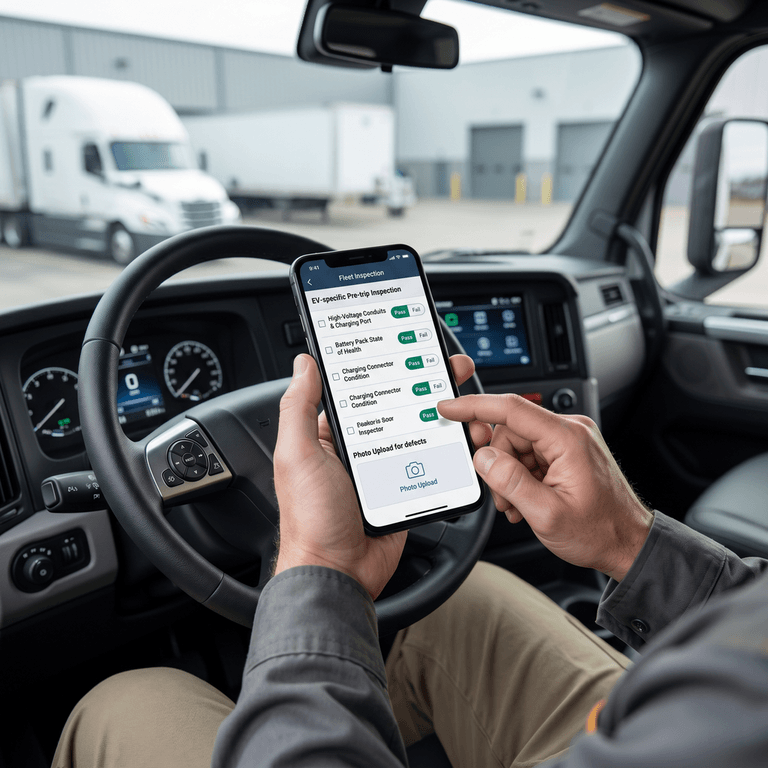
Intelligent inspection automation automatically adapts the DVIR form based on the specific asset profile, ensuring absolute checklist relevance.
Dynamic, Asset-Specific Inspection Forms
When a driver logs into their mobile workflow and inputs or scans an asset ID via barcode, QR code, or NFC tag, a cloud-connected system doesn't deliver a static document. It queries the central asset database and dynamically constructs the form interface. If the vehicle is an ICE unit, it populates the diesel parameters. If it is an EV, it completely suppresses the engine items and injects mandatory prompts for high-voltage loops, battery diagnostics, and charging interfaces. The driver only sees questions that are 100% relevant to the machine they are physically operating, slashing inspection time while maximizing accuracy.
Automated Defect Routing and Work Order Ingestion
Digital vehicle inspection reports remove human latency from the maintenance pipeline. The moment a driver marks an EV-specific component—such as a frayed charging interface or a cooling fluid fault—as a failure, the cloud system routes the defect instantly. Rather than sitting in an inbox, the failure is categorized by severity. Major defects automatically trigger an immediate notification to the fleet dispatcher to freeze the asset's schedule, while simultaneously generating a specialized work order inside the maintenance management dashboard. This seamless integration ensures that high-voltage specialists are alerted and parts are staged before the vehicle even rolls back into the terminal yard.
To analyze the exact financial metrics and operational cost drops achieved by converting to automated inspection routing, explore our comprehensive Paper vs. Electronic DVIR Cost Calculator.
6. Compliance Risks in Mixed Fleets: The Cost of Disconnected Systems
Operating a blended asset strategy without an integrated, cloud-based oversight layer exposes transportation companies to aggressive legal and regulatory liabilities. In 2026, enforcement frameworks have closed administrative loopholes, leaving paper-reliant operators highly exposed:
The FMCSA and NSC Audit Reality of 2026
Inspectors representing the Federal Motor Carrier Safety Administration (FMCSA) and Canadian provincial entities like the Ministry of Transportation of Ontario (MTO) have transitioned almost completely to digital, off-site compliance reviews. As documented extensively in our tactical review of 2026 DOT safety audit failure patterns, investigators utilize automated data scraping tools to identify record gaps. If your organization uploads paper records showing that your electric trucks are passing checks labeled "exhaust system structural sound," the auditor will immediately flag your data as fraudulent. This triggers deep, on-site forensic reviews of your entire historical record portfolio, often culminating in immediate safety rating downgrades to Conditional or Unsatisfactory status.
Technician Training and Documentation Blind Spots
Under strict North American commercial vehicle safety statutes, a motor carrier must prove not only that an inspection happened, but that the individual who executed subsequent repairs was explicitly certified to work on that exact asset class. In mixed fleets, maintaining this audit trail on paper is incredibly difficult. If a standard diesel mechanic attempts to clear an electrical fault code on an EV without verifiable high-voltage certification, and that asset is subsequently involved in an accident, plaintiff attorneys will weaponize the lack of digital documentation to secure massive "nuclear verdicts" against your company under negligent entrustment doctrines.
7. Best Practices Checklist for Mixed Fleet DVIR Compliance
To insulate your business from regulatory interventions and achieve flawless compliance execution across diversified asset types, safety directors should implement this authoritative, ten-step operational checklist:
- Standardize Digital Inspection Workflows: Mandate a complete ban on physical paper inspection pads across all regional terminals. Centralize all asset classes—whether diesel, hybrid, or electric—into a single, unified fleet compliance automation platform.
- Deploy Dynamic EV-Specific DVIR Forms: Ensure your inspection software can automatically alter the user interface based on vehicle propulsion, delivering a dedicated electric truck inspection checklist for zero-emission units.
- Enforce Rigorous Battery and Charging System Checks: Insert mandatory fields requiring drivers to visually inspect battery pack enclosures for physical debris impact marks and confirm the structural locking security of high-voltage charging ports.
- Enforce the Mandatory 3-Signature Repair Loop: Eliminate compliance gaps by utilizing a platform that technologically forces the absolute closure of the repair loop under FMCSA 396.11. When a defect is logged, the vehicle must be locked out until a certified technician signs off on the repair, and the next dispatching driver signs to confirm vehicle safety. Review the mechanics of this process in our guide on the FMCSA three-signature verification cycle.
- Train Drivers on Propulsion-Specific Safety Indicators: Conduct specialized onboarding detailing the unique warning signals of EVs, such as isolation fault dashboard warnings and specific thermal coolant temperature variances.
- Automate Preventive Maintenance Alerts: Connect your digital inspection data with mileage/hour trackers to automatically trigger service notices. EVs require lower-frequency but higher-precision maintenance, which must be tracked via cloud systems.
- Capture Photo and Video Evidence of Defects: Require drivers to attach clear, timestamped, and geotagged photographs within the mobile DVIR interface whenever a mechanical defect is marked as failed. This stops pencil whipping and accelerates mechanic repair accuracy.
- Maintain Consolidated, Cross-Border Audit-Ready Records: Ensure your cloud storage architecture retains all inspection documentation for at least 6 months to satisfy strict Canadian National Safety Code requirements, effortlessly bridging the gap for cross-border logistics lanes. For detailed cross-border deployment strategies, consult our Canadian NSC Standard 13 Compliance Guide.
- Establish CVSA Blitz-Ready Export Filters: Verify that your electronic dashboard can instantaneously aggregate and export pristine, multi-month inspection histories for targeted vehicles during peak enforcement windows like the annual CVSA International Roadcheck. Read how modern electronic systems protect scores during roadchecks in our analysis of the May 2026 CVSA Roadcheck operational data.
- Execute Quarterly Internal Compliance Mock Audits: Use your digital dashboard to run random sampling reviews of your mixed fleet documentation records every 90 days, proactively identifying and correcting any driver non-compliance or mechanic signature omissions before federal investigators intervene.
8. The Future of Mixed Fleet Compliance and Infrastructure
Looking past 2026, the technology backing commercial transportation safety is merging into a highly connected ecosystem. The transition to digital DVIR platforms is the foundational step in preparing a fleet for advanced technological integrations:

The centralization of safety data within a single cloud interface allows operators to maintain absolute audit readiness across all vehicle assets.
The Convergence of Telematics and Digital Inspections
The future belongs to the unification of human observation and sensor automation. While fleet telematics hardware can pull battery state-of-health (SoH) metrics and cell voltage imbalances directly via the vehicle bus network, it cannot see a cracked high-voltage conduit mounting bracket or an unsecured cargo load tiedown strap. Modern compliance strategies use telematics to flag internal software codes, while leveraging mobile electronic inspection forms to capture physical, visual safety integrity, fusing both into a singular, unassailable safety profile.
AI-Driven Diagnostic Automation
As mixed fleets expand, machine learning models will actively analyze historical digital DVIR submissions alongside ongoing maintenance invoices. By monitoring trends across thousands of unique configurations, the system will automatically adapt inspection check frequencies—prompting drivers to pay specialized, heightened attention to specific high-wear items on exact vehicle cohorts based on real-time external climate data or lane topography profiles. Implementing this digital infrastructure today ensures your logistics operation possesses the scalability required to remain highly profitable as zero-emission regulations tighten across North America.
9. Frequently Asked Questions (FAQ)
What is a digital DVIR for mixed fleets?
A digital DVIR for mixed fleets is an automated, cloud-based vehicle inspection platform engineered to dynamically modify its user interface and checklist components based on the exact propulsion type (Electric vs. ICE) of the asset being scanned, ensuring total compliance accuracy across a blended fleet portfolio.
How do EV inspections differ from diesel truck inspections?
While traditional diesel walk-arounds focus primarily on fluid leaks, fuel tank integrity, exhaust emissions, and engine belt wear, EV fleet inspections demand specific verification of high-voltage cable insulation, charging interface lock assemblies, battery enclosure impacts, and regenerative braking functionality.
Can a single DVIR system manage both electric and ICE vehicles?
Yes, provided you use an advanced, hardware-agnostic platform like PTI4YOU. Legacy systems or static forms fail because they cannot change fields dynamically, but specialized software manages all propulsion formats seamlessly within a single corporate dashboard.
What must be included in a commercial EV inspection checklist?
An audit-ready EV inspection routine must explicitly include visual validation of bright orange high-voltage conduits, charging port alignment and pin degradation checks, battery cooling array integrity, low-speed regenerative braking performance tests, and dashboard isolation status monitoring.
Is electronic DVIR software fully FMCSA and DOT compliant?
Yes. The FMCSA explicitly allows and encourages electronic records under 49 CFR Part 396.11, provided the system applies verified timestamps, enforces driver and mechanic electronic signatures, and retains data in a secure, immediately searchable and exportable cloud layout.
Why are cloud-based inspection records critical for mixed fleets?
Cloud systems eliminate the administrative friction of maintaining two entirely separate physical filing records for ICE and EV assets. They offer centralized security, historical traceability for multi-jurisdictional audits, and instant visibility into critical battery or brake defects across multiple terminal locations.
10. Conclusion: Securing Your Operational Advantage
The co-existence of internal combustion engines and battery-electric commercial vehicles is the defining operational paradigm of modern logistics. Fleet operators can no longer treat compliance tracking as a localized, back-office box-checking exercise. Running a modern transportation enterprise requires tools that match the advanced engineering profiles of the equipment traveling on the highway.
Persisting with obsolete paper logs or fragmented, rigid inspection apps compromises driver safety, encourages pencil whipping, and invites devastating enforcement interventions from federal auditors. By executing a calculated transition to specialized, dynamic digital DVIR software, your company builds an ironclad culture of safety fitness, slashes maintenance lead times, and establishes a highly scalable infrastructure designed to dominate the market. Step out of the analog past, eliminate documentation risk, and secure your operational advantage today.
Bulletproof Your Mixed Fleet Compliance Today
Stop forcing your drivers to use diesel checklists on electric vehicles. PTI4YOU delivers an intelligent, hardware-agnostic electronic DVIR system that automatically adapts to any asset profile—ICE, EV, or hybrid.
- ✅ Zero hardware required – Drivers use their existing iOS or Android smartphones.
- ✅ Dynamic inspection forms automatically display EV or ICE parameters by asset.
- ✅ Closed-loop 3-signature system enforces FMCSA 396.11 compliance automatically.
- ✅ Audit-ready cloud storage with one-click PDF compliance exports.
Zero setup fees. Zero hardware. 25-minute driver onboarding.