
The Short Answer
Public agencies are legally obligated to operate transparently, and that obligation now extends squarely into fleet records. When a resident, journalist, attorney, or oversight body requests a police cruiser's maintenance history or a sanitation truck's inspection log, the agency has to produce it — and state or local public records law typically starts a statutory clock the moment that request arrives. Municipal fleet managers still relying on paper binders, shared spreadsheets, or software with no verifiable audit trail are finding that this obligation now consumes far more staff time, and carries far more legal exposure, than it did even a few years ago.
This article explains why that burden is growing, what SOC 2 compliance actually means for a fleet software buyer specifically, and how a security-hardened, audit-trail-native digital system turns a records request from a multi-day scramble into a filtered export completed in minutes — without adding cost or complexity to an agency's technology stack.
Key Takeaways
- Municipal fleets face two compliance layers at once: standard DOT/FMCSA vehicle safety obligations, plus state and local public records disclosure law that most private carriers never have to reconcile simultaneously.
- Federal FOIA governs federal agency records — most day-to-day municipal fleet requests are actually decided under state or local public records statutes modeled on FOIA's transparency principles, not FOIA itself.
- SOC 2 Type II is an independent audit, not a vendor's self-description. Many government RFPs now require it as a baseline before a vendor's functionality is even evaluated.
- Transparent, uniformly-applied digital checklists — not discretionary monitoring — are how agencies can modernize inspections while addressing legitimate union concerns about surveillance.
- A defensible "proof of work" audit trail turns a records request that once took days of staff time into a filtered export completed in minutes, without ever comparing vendors.
Understanding the Municipal Fleet Compliance Burden
Municipal and public safety fleets sit at the intersection of two regulatory layers that most private carriers never face at the same time: standard vehicle safety and inspection obligations, and public records disclosure law. A private trucking company answers to the Federal Motor Carrier Safety Administration. A city public works department answers to the same inspection and maintenance expectations under 49 CFR Part 396 for its commercial vehicles, and it also answers to its residents, its city council, and its state's public records statute.
The DOT/FMCSA layer is familiar territory: inspection reports, driver vehicle inspection reports (digital DVIR or paper), maintenance schedules, and repair verification. Any fleet operating commercial motor vehicles carries these obligations regardless of who owns the vehicles.
The second layer is where public-sector fleets diverge sharply from private carriers. It is a confirmed legal obligation that public agencies must respond to valid public records requests within statutory timeframes set by their state or municipality. It is important to be precise here: the federal Freedom of Information Act applies to federal agency records. Most day-to-day requests for a city's fleet maintenance logs or a county's inspection history are governed by state and local public records statutes — often called "sunshine laws" — which are typically modeled on FOIA's transparency principles but carry their own definitions, exemptions, and response deadlines that vary by state. Assuming a single federal standard governs every municipal request is a common and costly misunderstanding.
Beyond the legal minimum, proactive record digitization and a documented retention policy are operational best practices, not statutory mandates — but they are what determine whether a records request takes an afternoon or several weeks. Every hour a clerk or fleet administrator spends manually locating paper records for a single request is an hour billed to taxpayers, and that cost compounds every time a new request arrives for a different vehicle, a different department, or a different date range.
Why SOC 2 Compliance Is Non-Negotiable for Government Fleet Software
SOC 2 is an independent, third-party audit of a software vendor's security controls, and government procurement and IT teams ask for it specifically because it replaces a vendor's self-description with an outside auditor's verification. A SOC 2 Type II attestation confirms that a vendor's controls over security, availability, processing integrity, confidentiality, and privacy — the AICPA's Trust Services Criteria — were tested and found effective over a defined period of time, not just designed correctly on paper at a single point in time. A Type I report only confirms the controls were suitably designed as of one date; Type II confirms they operated effectively across months of real operation, which is why procurement teams increasingly ask specifically for Type II and check how current the audit period is.
Driver personal data and vehicle location data are sensitive in a municipal context in ways that go beyond a typical commercial fleet. A police fleet's route history can reveal patrol patterns and response tactics. A code enforcement or utility technician's location data can expose visits to specific residences in ways that raise safety concerns in domestic violence or other sensitive situations. A public safety fleet's inspection and maintenance gaps can become evidence in litigation. None of this is data a municipality can afford to have handled by a vendor whose security practices are unverified.
This is also why vendors without SOC 2 create direct procurement risk, independent of how good their features are. Many government RFPs now list SOC 2 attestation as a baseline requirement, which means a non-compliant vendor can be disqualified before its functionality is even evaluated — the security review happens before the feature comparison, not after. pti4you.com's architecture is built around SOC 2-aligned controls and encryption from the ground up, which is why it clears this procurement bar without requiring the agency to fund additional integration work or custom security review cycles.
Protecting Against Liability and Internal Resistance
Legal and civil liability exposure
When public safety vehicle records are found to be altered, incomplete, or unverifiable during litigation or an internal investigation, the exposure is not abstract — it is civil liability and a documented erosion of public trust. A maintenance log that cannot be proven complete, or an inspection record with no encrypted timestamp verification behind it, invites the same legal risk as no record at all, because opposing counsel can argue the record was created or edited after the fact. In practice, this shows up as settlement pressure, extended discovery costs, and reputational damage that outlasts any individual case. An encrypted, timestamped audit trail — the same principle behind the 49 CFR 396.11 driver signature rule that governs private carrier inspection sign-offs — gives a municipality a record it can actually defend, whether the question comes from a plaintiff's attorney, an off-site FMCSA audit, or a records requester.
Internal and union resistance
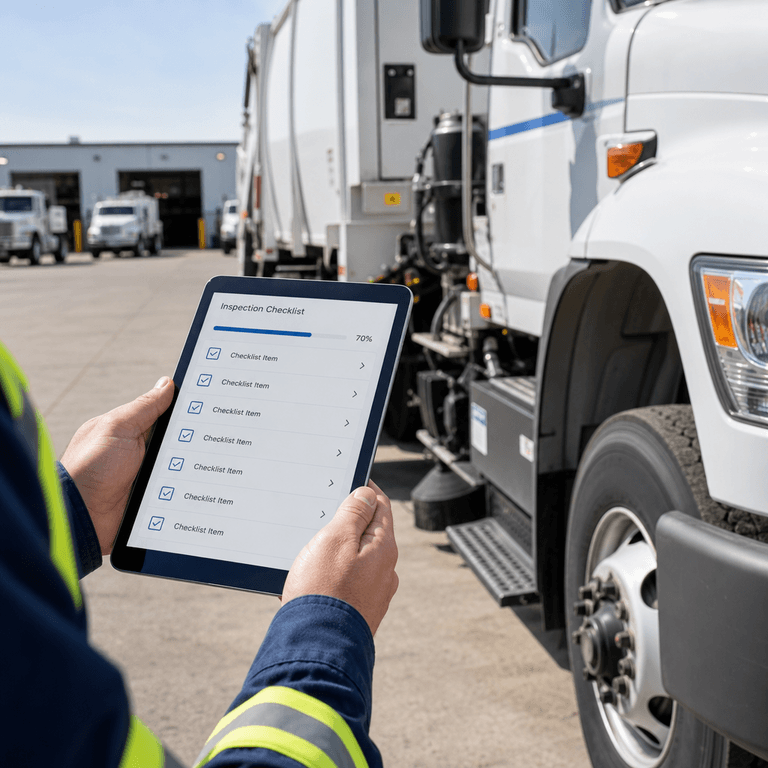
The second threat is internal, not legal: legitimate union concern that digital inspection systems amount to "total control" or covert surveillance of drivers. That concern deserves a real answer, not dismissal. The answer is structural: a transparent, uniformly-applied digital checklist asks every driver the identical set of questions using the identical criteria, with no discretionary flagging and no hidden scoring. That is fundamentally different from continuous location tracking or behavior scoring, and it protects drivers as much as management by creating an objective record instead of a subjective one. A driver accused of skipping an inspection has the same digital proof of compliance as the agency does — the record cuts both ways, which is precisely why it earns trust once union representatives see how it actually works. This same transparency principle is what eliminates pencil-whipped inspections without requiring covert monitoring: the checklist enforces consistency, not surveillance. pti4you.com's checklist-based inspection model, rather than continuous telematics tracking, is structurally suited to this exact concern — it documents that an inspection happened and what it found, not where a driver was every minute of the shift.
What "Proof of Work" Actually Means — and What It Saves
A defensible "proof of work" digital audit trail is a specific, concrete set of artifacts: GPS-stamped inspection photos, timestamped digital signatures tied to an individual driver or technician, immutable edit logs that preserve every change rather than overwriting the original entry, and structured maintenance history linking each repair back to the defect that triggered it. Any one of these missing weakens the record's defensibility; together, they are what an auditor, an attorney, or a records requester actually needs to trust that a document is what it claims to be.
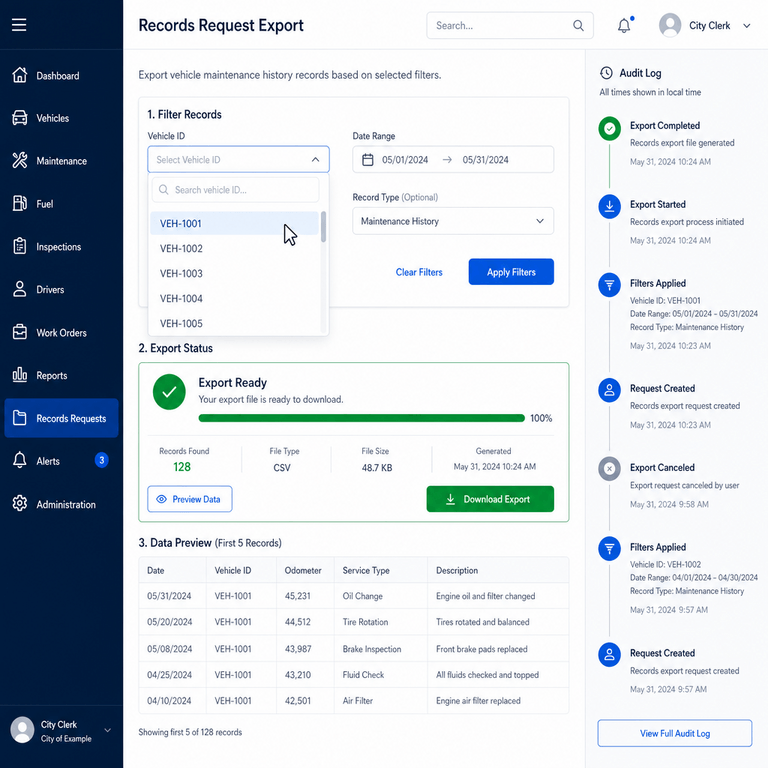
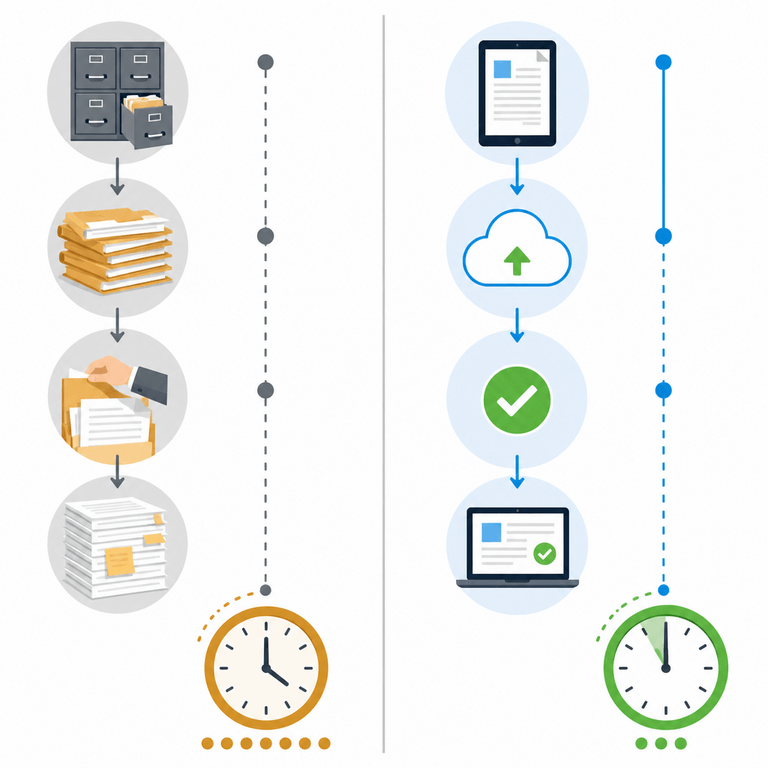
Consider a realistic scenario. A city clerk receives a public records request for a specific sanitation truck's full maintenance and inspection history over the past twelve months. Under a paper-based system, that means locating the vehicle's physical file — possibly across multiple storage locations if the truck changed depots — manually reviewing every page for anything requiring redaction under the state's public records exemptions, and assembling a response that may take days to weeks and consume several staff hours that could otherwise go toward the department's actual work. Under a SOC 2-secured digital system, the same request becomes a filtered export by vehicle ID and date range, produced in minutes, with the audit trail already documenting who accessed and exported the record and when.
| Audit Trail Component | What It Verifies | Effect on a Records Request |
|---|---|---|
| GPS-stamped inspection photos | Inspection occurred at the vehicle's actual location and time | Removes the need to manually verify an inspection was genuine |
| Timestamped digital signatures | Which individual completed or verified each step, and when | Answers "who and when" instantly instead of via follow-up calls |
| Immutable edit logs | Whether a record was altered after its original entry | Defends the record's integrity without a forensic review |
| Structured maintenance history | Each repair tied to the defect that triggered it | Enables a single filtered export instead of file-by-file assembly |
The staff-hour savings are the real financial argument here, and they are directional rather than a fixed dollar figure: every request handled as a filtered export instead of a manual file search reclaims hours that would otherwise be billed to taxpayers, reduces the risk of missing a statutory response deadline, and shortens legal turnaround when records are needed for litigation rather than a routine request. Centralized fleet maintenance records that live in one exportable system, rather than split across paper files, spreadsheets, and departmental silos, are what make that speed possible.
Why pti4you.com Is Built for Public-Sector Trust
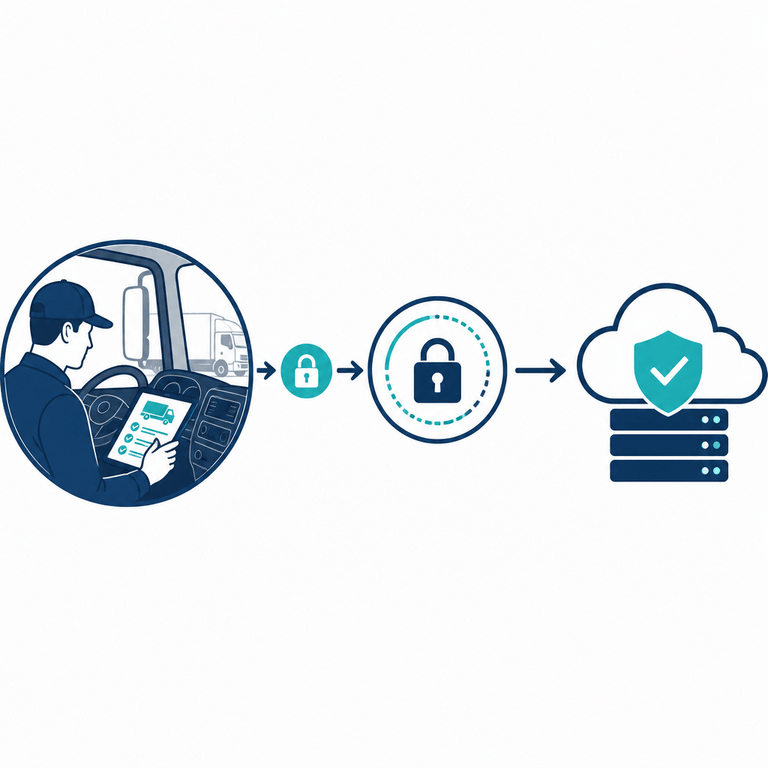
pti4you.com is built around SOC 2-aligned controls and encryption as foundational architecture, not as a feature bolted on after the fact — which matters specifically because public-sector procurement teams evaluate security posture before they evaluate anything else.
- SOC 2-aligned and encryption-first by design. Data protection is architectural, not an add-on module, which is what a security review actually checks for.
- Hardware-agnostic and Bring-Your-Own-Device. Public agencies avoid multi-year proprietary hardware lock-in that ties up capital and complicates budget cycles governed by annual or biennial appropriations.
- Built for one-click "proof of work" evidence export, directly addressing the records-request turnaround time and staff-hour cost described above.
- Transparently and publicly priced, which matters distinctly in public-bid contexts — opaque quoting is itself a procurement red flag and complicates justifying cost to a city council or board.
For public agencies, compliance is a matter of public accountability to taxpayers. pti4you.com offers a transparent, SOC 2-aligned digital archive, ready for immediate records production the moment a request arrives — without proprietary hardware costs or multi-year lock-in.
The practical effect for a fleet compliance software evaluation is that agencies can standardize inspections across police, public works, and utility departments on one fleet compliance software platform, apply customizable digital inspection templates across mixed vehicle categories, and maintain a single, centralized Driver Qualification File and maintenance record system — instead of reconciling separate departmental systems every time a records request or audit crosses department lines.
Municipal Fleet Readiness Checklist
Before your next security review or records-request audit, work through these ten items:
- Confirm your current fleet software vendor's SOC 2 status — Type I vs. Type II, and how current the audit date is.
- Digitize all inspection and maintenance records and eliminate standalone paper files as the system of record.
- Verify encryption at rest and in transit for all stored vehicle and driver data.
- Establish a uniform, transparent inspection checklist applied identically to every driver, with no discretionary criteria.
- Confirm audit-trail immutability — edit logs that preserve history, not just final records.
- Build a documented data retention and export policy aligned to your state's public records statute.
- Test a mock records request end-to-end to measure your actual turnaround time and staff hours consumed.
- Brief union representatives proactively on exactly what is, and is not, monitored.
- Centralize documentation across departments — police, public works, utilities — rather than maintaining siloed systems.
- Review vendor contract terms for data ownership, export rights, and hardware costs upon contract termination.
Frequently Asked Questions
How does secure cloud storage assist in resolving Freedom of Information Act (FOIA) requests?
GRC-secured cloud databases let municipal fleet managers compile, filter, and export vehicle maintenance and inspection histories in seconds, eliminating the manual search labor that paper files or fragmented digital records require. Because every record carries a timestamp and an audit trail, staff can produce exactly what a request asks for without manually re-reading each document to verify its authenticity.
What happens if public safety vehicle records are found to be altered or incomplete?
Municipalities can face civil liability and an erosion of public trust when digital inspection and maintenance trails lack encrypted timestamp verification, particularly if gaps or inconsistencies surface during litigation, an internal investigation, or a public records dispute. Records that cannot be verified as complete and unaltered carry the same legal exposure as records that were never kept.
What is SOC 2 compliance, in plain terms?
SOC 2 is an independent, third-party audit of a software vendor's security controls, based on the AICPA's Trust Services Criteria covering security, availability, processing integrity, confidentiality, and privacy. A SOC 2 report tells a buyer that an outside auditor has verified how the vendor protects the data it stores, not just that the vendor claims to protect it.
Does FOIA apply to local/municipal fleet records, or only federal agencies?
The federal Freedom of Information Act applies to federal agency records, not directly to city, county, or municipal records. Most day-to-day requests for municipal fleet records are governed by state or local public records statutes, which are typically modeled on FOIA's transparency principles but carry their own definitions, exemptions, and deadlines that vary by state.
How long do agencies typically have to respond to a public records request for fleet data?
There is no single nationwide deadline. Response and production timeframes vary significantly by state statute and by the complexity of the request, so municipal fleet managers should confirm the specific timeframe in their own state's public records law rather than assume a uniform standard applies.
Can union concerns about digital monitoring be addressed without abandoning digital inspections?
Yes. The key is replacing discretionary, opaque monitoring with a transparent, uniformly-applied digital checklist that asks every driver the same questions using the same criteria, with no hidden scoring or selective flagging. That structure protects drivers by creating an objective record, rather than subjecting them to unexplained management discretion.
What should a government IT director look for when evaluating fleet software vendors?
Government IT directors should confirm current SOC 2 status (Type I versus Type II, and how recent the audit period is), encryption at rest and in transit, documented data ownership and export rights, audit-log immutability, and whether the pricing and contract terms are transparent enough to defend to a city council or board during budget review.
Is proprietary GPS hardware required for SOC 2-compliant fleet software?
No. SOC 2 attests to a vendor's security controls and data-handling practices, not to any particular hardware architecture. A hardware-agnostic, Bring-Your-Own-Device platform can be built around SOC 2-aligned encryption and access controls just as thoroughly as a platform that requires proprietary in-vehicle hardware.

The Bottom Line
Municipal and public safety fleets carry a compliance burden private carriers don't fully share: the same vehicle safety obligations as any commercial fleet, plus a legal duty to produce records on demand under state and local public records law. Meeting that duty with paper files or software that can't prove its own audit trail is slower, more expensive in staff hours, and riskier in litigation than it needs to be in 2026.
An encrypted, SOC 2-aligned, audit-trail-native system changes the economics of every records request your agency will ever receive — and it addresses the union transparency question at the same time, through the same uniform checklist structure.
Start your 15-day free trial today and see exactly what a records-request-ready fleet compliance program looks like for police, public works, and utility fleets.
Get Your Agency Records-Request Ready
See how pti4you.com's SOC 2-aligned, hardware-agnostic platform gives municipal fleets a defensible audit trail and a one-click "proof of work" export — without proprietary hardware or multi-year lock-in.
Start your 15-day free trial and see it in action.
Start Your Free TrialNo credit card required. Built for the US and Canada public sector.
Official Sources and Further Reading
- eCFR — 49 CFR Part 396: Inspection, Repair, and Maintenance
- AICPA & CIMA — SOC 2 Trust Services Criteria
- American Public Works Association — Fleet Management Committee
- FOIA.gov — U.S. Department of Justice Freedom of Information Act Resources
This article reflects generally applicable SOC 2 and public records concepts as of August 29, 2026. Public records deadlines and exemptions vary by state and municipality; agencies should consult their own state's public records statute and legal counsel for jurisdiction-specific requirements.